The 5 most famous wild camping spots in Switzerland
Google "wild camping in Switzerland" and these five come up first. At two of them a tent is flat out forbidden, and getting caught costs real money. The other three are allowed, but only if you know the trick: the one farmer to ask, which side of the ridge to pitch on, where the hunting ban stops. Here is the catch at each, and the trick where there is one.
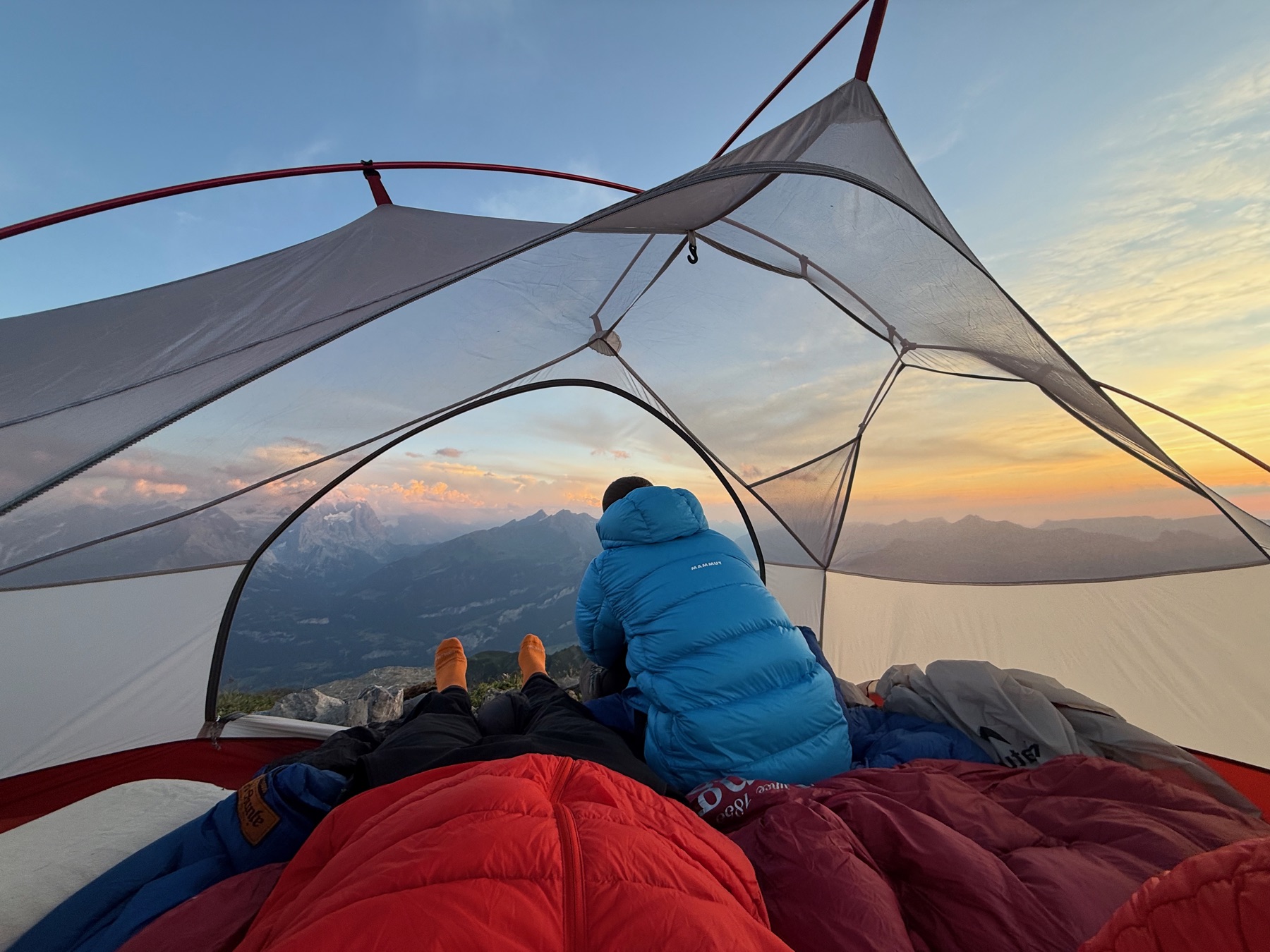
Famous is the problem, not the appeal
People wild camp to be alone. That is the whole thing: one tent, no one else, the light doing its thing with nobody around. Which is the irony of that search you just did, because the moment a spot is good enough and easy enough to rank on every "wild camping Switzerland" list, one of two things has already happened to it.
Either a municipality has noticed the crowds and banned it, with a fine attached, or it has simply filled up with everyone else who saw the same reel. The five below are the most famous in the country. That is precisely why I would not send you to any of them for a night alone. Here they are anyway, honestly, and here is what to watch out for at each, worst legal risk first.
Kandersteg · Bernese Oberland · 1'578 m
Banned · real fine1. Oeschinensee
The turquoise one from every Switzerland reel, and the clearest no on this list. Pitching a tent is banned across the whole municipality of Kandersteg, the Oeschinensee basin included, under the municipal police regulation (Art. 7, in force since 2021). The fine runs up to CHF 5'000, in practice tariffed at CHF 200 plus clean-up1. The tent-free bivouac, which the regulation would otherwise leave alone, is closed off right at the lake by a private judicial prohibition from the landowners that names bivouacs and hammocks by name, up to CHF 2'000. The lake sits below the treeline, so the SAC tolerance does not rescue you either7. Two separate laws, both enforced.
Full breakdown, OeschinenseeZermatt · Valais
Banned · real fine2. Riffelsee
The Matterhorn doubled in the water at sunrise, the reflection shot everyone wants. Zermatt bans camping outside authorised sites under Article 43 of its police regulation, and the fine is CHF 200 per tent2. If a patrol has to come up out of hours, the operation goes on your bill too, and that is not a round number. It is a served lake reached by cog railway, with a hotel just below. The fine is written per tent, and in Valais practice a planned bivouac without a tent is treated the same as camping, so there is no quiet-night version here, only a more or less expensive one.
Full breakdown, RiffelseeAlpstein · Appenzell / St. Gallen border
Grey zone · not alone3. Saxer Lücke
That photo of tents lined up on a green ridge at golden hour is here. An Alpstein ranger told me straight that Appenzell has no camping law with fines yet, so on the Appenzell side nobody tickets you, they only talk. The catch is geography: the few flat pitches sit on the ridge, and the ridge is the cantonal border. A step east and you are in St. Gallen (Gemeinde Sennwald), where the protection ordinance explicitly forbids and fines camping and bivouacking both3, with seasonal wildlife rest zones on top. Grey zone, tolerated, not allowed. And because it is the single most photographed wild-camping spot in the country, you will be pitching next to the same tents from the picture.
Full breakdown, Saxer LückeAlpstein · Appenzell Innerrhoden · 1'142 m
Allowed with consent · not alone4. Seealpsee
The Säntis mirrored in a lake with two mountain restaurants and a boat. Like the Fälensee, this one is allowed at the landowner's place: Appenzell has no camping fine (the penalty articles were repealed in 20054), and the responsible Senn can allow a single tent on his own alp. The catch is who owns what. The canton holds much of the shore and does not want camping, so the lawful pitch is the Senn's ground with his yes, not the waterline, and even then it is a served basin where day-trippers stay until the light goes. Allowed, if you ask the right person. Alone, never. The full Seealpsee article walks through who to ask.
Full breakdown, SeealpseeAlpstein · Appenzell Innerrhoden
Actually legal · still busy5. Fälensee
The honest exception, and the one people most want to hear about. At the Fälensee wild camping really is allowed: you ask the Fälenalp tenant, pay his fee (around CHF 12 a person), and stay in his marked zone5. No federal hunting-ban district at the lake6, no cantonal fine, a real yes from the person who owns the ground. Which is genuinely great, and also the reason that on a warm Saturday his marked zone looks like a small festival. The one famous spot where the law is squarely on your side is, for that exact reason, never yours alone.
Full breakdown, FälenseeSee the pattern
Line them up and it is the same story five times. Off-limits, off-limits, grey zone, no solitude, festival. Famous and quiet cannot both be true of a wild-camping spot, because fame is measured in exactly the thing that ruins it: how many other people are on their way there tonight.
The spots where you actually get the water to yourself are the ones nobody is tagging. Above the treeline, off the served valleys, outside the protected areas, with no restaurant at the bottom of the walk. They are not quiet because they are secret. They are quiet because they take a bit of effort to reach, and because the people who know them do not post the pin. That is the entire reason the guide exists.
The rules that apply wherever you do sleep out
This holds at every spot you are actually allowed to spend the night, the legal ones in the guide included. It is not statute, it is decency and common sense, and it is the reason the alps still tolerate anyone at all. For the full legal picture, the treeline, the protected areas, the three stricter cantons, see wild camping in Switzerland, what the SAC rule actually allows.
- No fire. An open fire has no place in the mountains. A gas stove is enough.
- Pitch late, strike early. Set up towards evening, gone again early. A bivouac is one night, not a base camp.
- Leave no rubbish. Everything you carry up you carry down, organic scraps and toilet paper included.
- At least 50 metres from any water for the big business, so you do not foul what people and livestock drink.
- Stay small and quiet. A small group, no speaker, no drone, dogs on the lead, and the alp staff's word goes.
Disclaimer
This article reflects my research and assessment to the best of my knowledge, as of July 2026, based on the publicly accessible and official sources linked below. It does not replace legal advice and is not a binding statement of the current legal situation.
Municipal and cantonal rules, ownership, protected areas and alpine operators' arrangements can change, and Appenzell Innerrhoden in particular is drafting a new camping law. What is described here may already be out of date by the time you read it. Before every tour, check the current sources yourself, ask the responsible landowner or Senn on site, and check the protected-area layers, above all the federal hunting-ban districts, on map.geo.admin.ch. Anyone who spends the night outside bears responsibility for their own conduct and any consequences themselves. Hikebeast, Leon Helg and Saftladen GmbH accept no liability for decisions made on the basis of this text, and call on no one to break applicable law.
Frequently asked questions
Where can I wild camp alone in Switzerland?
Which famous Swiss spots are banned for camping?
Which famous spot is actually legal to camp at?
Is wild camping legal in Switzerland in general?
Do the famous spots really hand out fines?
Leon Helg
Swiss filmmaker and software developer. Spends his free time in the Swiss Alps and maps his favourite spots for Hikebeast, 141 documented. Posts as @leon.helg on Instagram and TikTok.
Sources
- Oeschinensee: Gemeinde Kandersteg, Gemeindepolizeireglement Art. 7 (tent ban across the municipality, in force since 1.1.2021, fine up to CHF 5'000, tariffed at CHF 200 plus clean-up); private judicial prohibition (richterliches Verbot, Art. 258 ZPO) of the landowners at the lake, naming bivouacs and hammocks, fine up to CHF 2'000. Full primary sources in the Oeschinensee breakdown. ↩
- Riffelsee: Gemeinde Zermatt, police regulation Art. 43 (camping prohibited outside authorised sites), fine CHF 200 per tent plus any police operation costs. Full primary sources in the Riffelsee breakdown. ↩
- Saxer Lücke: Gemeinde Sennwald (SG), protection ordinance (camping prohibited and finable on the St. Gallen side); Appenzell Innerrhoden currently has no camping-penalty law (statement of an Alpstein ranger); seasonal wildlife rest zones apply. Full sources in the Saxer Lücke breakdown. ↩
- Seealpsee: Canton of Appenzell Innerrhoden, camping ordinance (Campingverordnung, GS 935.610); the penalty articles were repealed on 31.10.2005, so there is no camping fine, and the canton as a major landowner declines consent. ai.clex.ch. Full sources in the Seealpsee breakdown. ↩
- Fälensee: Canton of Appenzell Innerrhoden, camping ordinance (GS 935.610) permits occasional camping with the landowner's consent; the Fälenalp tenant charges a per-person fee (around CHF 12, about CHF 15 with prior notice) for a marked zone. Full sources in the Fälensee breakdown. ↩
- Federal hunting-ban districts: Ordinance on Federal Hunting-Ban Districts (VEJ), SR 922.31, Art. 5 para. 1 lit. e ("Free tenting and camping is prohibited"); Federal Act on Hunting (JSG), SR 922.0, Art. 18 para. 1 lit. e, ceiling CHF 20'000 in ordinary proceedings, while the fixed penalty actually issued for this act is CHF 150 under Ordnungsbussenverordnung (OBV, SR 314.11) Anhang 2 Ziff. 12005. The Alpstein lakes lie outside the district at lake level; higher up inside it the federal ban applies and no landowner's consent helps. Check the layer on map.geo.admin.ch. VEJ, JSG. ↩
- Swiss Alpine Club (SAC), information sheet "Camping and bivouacking in the Swiss mountains": a single night above the treeline is usually tolerated if done considerately; this is guidance, not law, and does not apply below the treeline (as at the Oeschinensee at 1'578 m). sac-cas.ch. ↩
- General: Swiss Civil Code (ZGB), SR 210, Art. 699 (access to forest and pasture, no right to an overnight stay). fedlex.admin.ch. The full national picture is in Wild camping in Switzerland, what the SAC rule actually allows.