Wild camping at the Seealpsee, how it is possible
The Seealpsee is the lake everyone photographs, and everyone will tell you camping there is forbidden. The truth is more precise, and more useful: there is no public right and it is officially discouraged, but there is a way to do it right. Here is the honest situation.
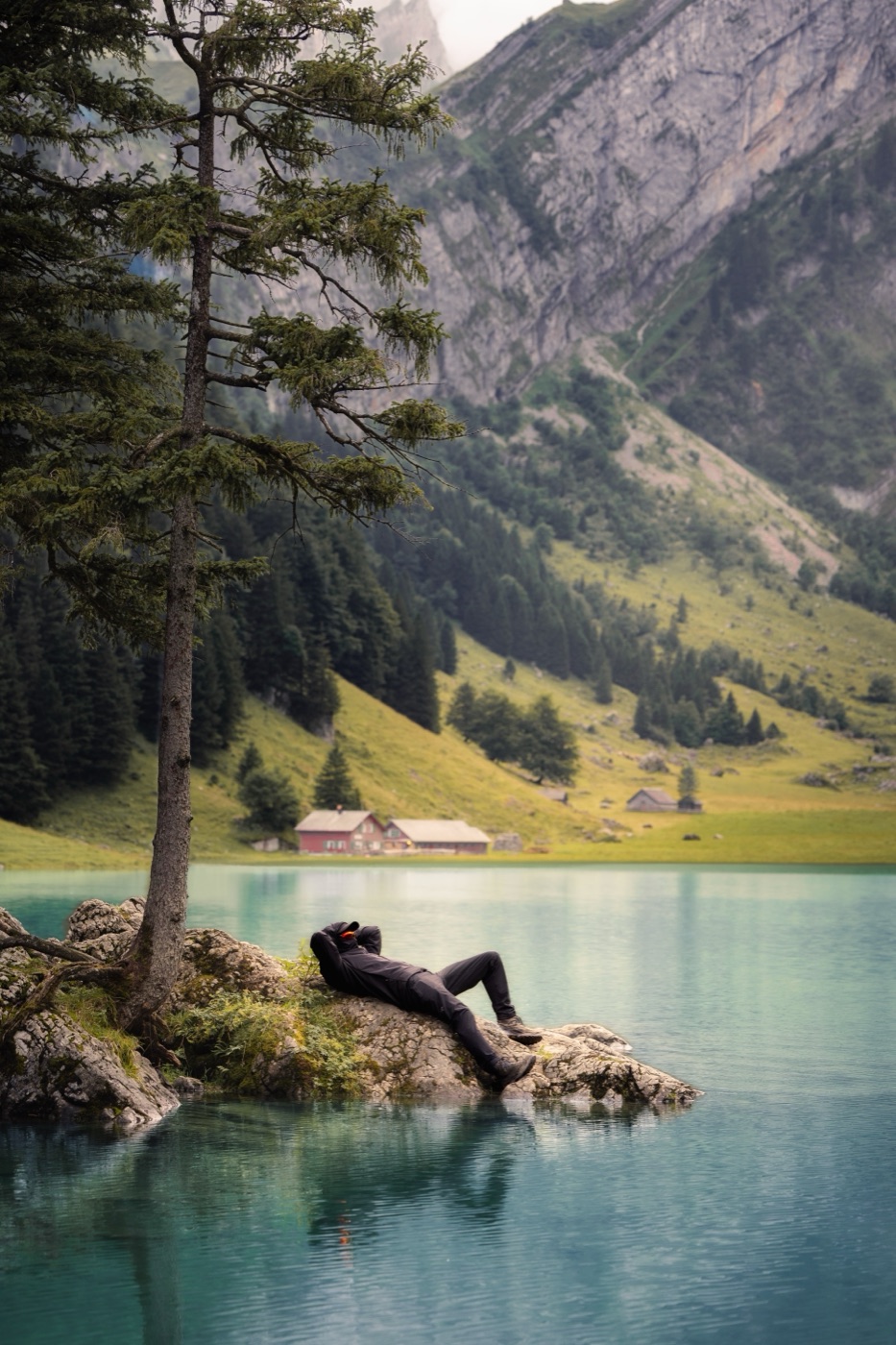
What do these mean?
Illegal A specific rule bans it, usually with a fine, and it can be enforced. Sleep somewhere else.
Not allowed No real place to camp here. A gated site, a developed area, or nowhere sensible to lie down, even if no fine is attached.
It depends You can sleep here, but there's a condition first: ask the landowner, book a spot, stay inside a set zone, or use a bivvy instead of a tent. The report says which.
Tolerated No rule clearly allows or bans it, but a single night is accepted in practice and nobody enforces against it. Normal for high bivouacs above the treeline.
Legal Camping one night is fine here. Either a rule allows it, or we checked every law and found nothing against it. Still: pitch late, leave early, no trace.
The famous lake, and the honest answer
Most wild-camping stories are simpler than this one. At the Oeschinensee, real, enforceable law sits behind the ban, and there is a fine. The Seealpsee is the case people get most wrong. You will read a flat "verboten" everywhere, but there is no camping fine at all, and the "no" is not a statute, it is the landowner declining. So the honest answer is not "forbidden" and not "free for all". It is: no public right, ask the Senn, and there is no ticket either way.
Three things decide it, and they are worth taking in turn: the federal map, Appenzell's cantonal law, and who owns the Seealp.
The lake lies outside the hunting-ban district
The Säntis towers over the Seealpsee, and the high massif is a federal hunting-ban district (Jagdbanngebiet) (object no. 16 "Säntis"). Inside such a district a hard federal rule applies1:
"Free tenting and camping is prohibited. The use of official camping sites is reserved. The cantons may grant exceptions."Ordinance on Federal Hunting-Ban Districts (VEJ), Art. 5 para. 1 lit. e
That is no paper tiger. Free camping inside the district is a federal offence, finable at CHF 150 on the spot under the Federal Hunting Act (JSG) and enforced by the game wardens, and there no landowner's consent helps, only the canton can grant an exception7. The wording of the ban is aimed at tenting and camping; do not go hunting for a sleeping-bag loophole in it. A hunting-ban district exists so that nothing disturbs the game at all, the wardens patrol it, and nobody has tested that reading in your favour.
But the important fact is this: the Seealpsee lies outside that hunting-ban district. I checked it on the federal map. The layer of federal hunting-ban districts returns nothing at the lake basin, while the integral-protection polygon of object no. 16 sits on the north-side massif to the west (Rossegg, Ober-Mesmer, Lochtem)1. So the federal camping ban does not reach the shore. It does apply if you climb from the lake up into the Säntis massif, and then a farmer's yes is worth nothing. At the lake, the question is instead cantonal and private.
For completeness: the lake sits in the BLN inventory (object 1612 "Säntisgebiet")8, which binds the authorities to take care but does not fine an individual camper. The Alpstein is not a UNESCO World Heritage Site.
What Appenzell law says: consent, not a ban
Appenzell Innerrhoden has no law that bans wild camping. Its camping ordinance (Campingverordnung, GS 935.610) instead permits the occasional placing of a single tent outside official campsites, capped at about one month per year, and a cantonal decision reads that provision as an owner-based exception, for example a group the landowner personally allows, not a public right to camp anywhere2. Its penalty articles were repealed in 2005, so the ordinance carries no fine for wild camping at all.
That is the key to reading the official "no". As long as there is no leisure law, there is nothing to fine you with4:
"As long as there is still no leisure law, there is no fine."Position of the canton of Appenzell Innerrhoden, via the regional press
So the police, the alp staff or a warden can ask you to leave, but not issue a ticket. And the Standeskommission, the cantonal government, holds as the rule in force that camping stays allowed "with the express permission of the landowners or the responsible Sennen"3. That permission is exactly what is hard to get at the Seealp, and exactly what makes or breaks a lawful night. The "access to forest and pasture for everyone" of Art. 699 of the Civil Code (ZGB) does not rescue it: that is a right of passage and to gather berries, not to sleep overnight6.
Who owns the Seealp, and why it matters
Around the Seealpsee the canton is a major landowner, and it does not want camping. In its own words, via the regional press9:
"We do not want a campsite around the Seealpsee, and one would not even be legally possible."Canton of Appenzell Innerrhoden as landowner, via the regional press
Two things sit inside that sentence. The "we do not want" is the owner declining consent, which is the whole game under the camping ordinance. The "not even legally possible" is a separate, spatial-planning point: a permanent campsite in the alpine zone would need a planning permit that the Baugesetz does not give for a facility unrelated to alpine management11. That is about a campground, not about a single tent for one night.
But the ownership is mixed, and that is the nuance most reports miss. The alp rights on the Seealp are held partly by the canton (which bought one of them in 1942) and partly by private persons, and the canton also leases some of them10. So it is not one public "no" across the whole basin. A private Senn who controls his own alp can give the consent the ordinance asks for, on his ground.
How to do it right: ask the Senn
The Alpstein's own house rules put the mechanism plainly12:
"Kein wildes Zelten. Biwakieren mit Einwilligung des Grundeigentümers gestattet."Alpstein house rules (Meglisalp and others): no wild camping; bivouacking permitted with the landowner's consent.
So the lawful route at the Seealp is not to pitch up, it is to ask the responsible Senn first. At the upper end of the lake there is a Senn, Hans Gmünder of the Seealp cheese dairy, whom you may ask for permission on his alp13. It is an on-the-ground arrangement rather than a published offer, so phone ahead and confirm.
The lawful route is his yes. Call or write to the Seealp Senn Hans Gmünder before you go, ask whether you may put up a single tent on his alp for one night, and follow what he says. It covers his ground, not the canton-owned shore, and it is a one-off, not a campsite.
What does it cost? People who have stayed there mention a fee of around 7 francs a night. That is word of mouth, not a published rate, so take it as a hint and settle it with Hans directly.
seealpchaes.ch/kontakt · +41 79 441 22 73
If you would rather have a roof, the Berggasthaus Seealpsee and the Gasthaus Forelle at the lake have rooms and dormitory beds.
Where it does not apply, or does not help
The Seealpsee answer is spot-specific. Three places where it flips.
- Higher up in the hunting-ban district. Climb from the lake into the Säntis massif and you are in the federal Jagdbanngebiet, where free camping is a federal offence, finable at CHF 150 on the spot, and no farmer's consent helps.
- Anywhere without consent. On the canton-owned shore, or on any alp without the Senn's yes, you have no permission. You will not be fined today, but you can be moved on at any time, and rubbish or faeces are in any case a matter for environmental protection law.
- As a public campsite. An advertised, recurring camping offer is no longer the occasional exception the ordinance allows, and it runs into the zoning wall the canton describes. This is about one tent for one night with permission, nothing more.
Bivouac, emergency bivouac and the treeline
You will read that a single bivouac above the treeline is usually tolerated. That comes from the SAC information sheet and is not a binding legal norm5, and at the Seealpsee it fits badly anyway: the lake sits at 1'142 metres in a wooded, busy, serviced setting, below the treeline, not on a lonely high ridge. The operative rule here is not altitude but consent, which is exactly what the Alpstein house rules say: no wild camping, but a bivouac with the landowner's consent.
Kept apart from all of this is the genuine emergency bivouac: anyone caught out by weather, injury or nightfall who can no longer descend safely may stay out. That is an emergency, not a planned camp, and generally permissible.
What is changing soon
An assessment with an expiry date. Back in 2019 the canton's line was that camping at the Seealpsee was "grundsätzlich erlaubt", and the tourism director only proposed a ban14. By 2025 the canton-as-owner had hardened to "grundsätzlich verboten", and the Standeskommission is now drafting a cantonal camping law: wild camping on private and public car parks to be banned as a rule, bivouacking only under conditions and with the landowner's permission. The earliest Landsgemeinde vote is estimated at around 20283. Until then the consent rule described here applies, so read this as a snapshot and re-check before a tour.
General rules for wild camping
This applies everywhere you are actually allowed to sleep outside, so on a Seealp alp with the Senn's consent too. It is not legal text, but decency and common sense, and it is the reason the alps still tolerate anyone at all.
- No fire. An open fire has no place in the mountains. A gas stove is enough.
- Pitch the tent late, take it down early. Only set up towards evening, gone again early in the morning. A bivouac is one night, not a base.
- Leave no rubbish. Everything you carry up, you carry down again, including organic scraps and toilet paper. Rubbish, noise and faeces are exactly what turned the canton against wild camping at the Seealpsee.
- At least 50 metres from any body of water for the big business, so you do not foul the drinking water of people and livestock.
- Stay small and quiet. A small group, no speaker, no drone, dogs on the lead, and the instructions of the alp staff take priority.
Disclaimer
This article reflects my research and assessment to the best of my knowledge, as of July 2026. It is based on the publicly accessible and official sources linked below. It does not replace legal advice and is not a binding statement of the current legal situation.
Cantonal ordinances, ownership, protected areas and alpine operators' rules can change, and Appenzell Innerrhoden is expressly working on a new camping law. What is described here may already be out of date by the time you read it. Before every tour, check the current sources yourself, ask the responsible Senn or landowner on site, and check the protected-area layers, in particular the hunting-ban district, on map.geo.admin.ch. Anyone who spends the night outside bears responsibility for their own conduct and any consequences themselves. Hikebeast, Leon Helg and Saftladen GmbH accept no liability for decisions made on the basis of this text, and call on no one to break applicable law.
Frequently asked questions
Is wild camping allowed at the Seealpsee?
Is there a fine for camping at the Seealpsee?
Can you get permission to camp, and who do you ask?
Is the Seealpsee inside the Jagdbanngebiet Säntis?
What is changing soon in the legal situation?
Why is it different from the Oeschinensee?
Leon Helg
Swiss filmmaker and software developer. Spends his free time in the Swiss Alps and maps his favourite spots for Hikebeast. Posts as @leon.helg on Instagram and TikTok.
Sources
- Ordinance on Federal Hunting-Ban Districts (VEJ), SR 922.31, Art. 5 para. 1 lit. e ("Free tenting and camping is prohibited ..."); Annex, object no. 16 "Säntis" (AI/AR). The Seealpsee lies outside this area: the identify query of the layer "ch.bafu.bundesinventare-jagdbanngebiete" returns nothing at the lake (2'748'412 / 1'237'186), while the district's integral-protection polygon sits on the north-side massif to the west. fedlex.admin.ch, map.geo.admin.ch. ↩
- Canton of Appenzell Innerrhoden, camping ordinance (Campingverordnung, GS 935.610), Art. 4 "Camping ausserhalb von Campingplätzen": permits the occasional placing of a single tent outside official sites with the owner's consent (about one month per year); a cantonal decision (2023) reads Art. 4 as an owner-based exception, not a public right; the penalty articles (Art. 11 to 15) were repealed on 31.10.2005, so the ordinance knows no fine for wild camping. ai.clex.ch. ↩
- Standeskommission Appenzell Innerrhoden, statement "Canton of Appenzell I.Rh. sets the course in camping tourism" (2025): camping remains allowed "with the express permission of the landowners or the responsible Sennen"; planned law (wild camping on car parks banned as a rule, bivouacking only under conditions), earliest Landsgemeinde vote around 2028. ai.ch. ↩
- Regional reporting on the canton's position: "As long as there is still no leisure law, there is no fine"; police or the game warden can send people away, but not ticket them for ordinary tenting. fm1today.ch. ↩
- Swiss Alpine Club SAC, information sheet "Camping and bivouacking in the Swiss mountains": a single night above the treeline is usually tolerable if done considerately and at least 50 m from any body of water; an emergency bivouac is generally permitted. Guidance, not law. sac-cas.ch. ↩
- Swiss Civil Code (Zivilgesetzbuch, ZGB), SR 210, Art. 699 (access to forest and pasture; no right to an overnight stay; camping needs the landowner's consent). fedlex.admin.ch. ↩
- Federal Act on Hunting (JSG), SR 922.0, Art. 18 para. 1 lit. e (disregarding measures that protect animals from disturbance, which is the hook for free camping in a hunting-ban district; ceiling CHF 20'000 in ordinary proceedings) and Art. 11 (basis of the federal hunting-ban districts). Ordnungsbussenverordnung (OBV, SR 314.11), Anhang 2 Ziff. 12005 sets the fixed penalty actually issued for this act at CHF 150. fedlex.admin.ch. ↩
- Federal Inventory of Landscapes and Natural Monuments (BLN), object 1612 "Säntisgebiet"; the Seealpsee lies within the perimeter (verified on map.geo.admin.ch, layer "BLN"). Effect via Art. 6 NHG (binding on the authorities), no camper fine. bafu.admin.ch/bln. ↩
- Regional reporting on the canton's position as landowner at the Seealpsee: "Around the Seealpsee, where the canton is the landowner, camping is banned as a rule. We do not want a campsite around the Seealpsee, and one would not even be legally possible." fm1today.ch. ↩
- Cantonal parliamentary materials on Alp Spitzigstein, Seealp (2010): the Alprecht Spitzigstein in Seealp Boden was bought by the canton in 1942; the alp rights in Seealp Boden are held both by the canton and by private persons, with the canton acting as lessor. Ownership around the lake is therefore mixed. ai.ch (Grossrat). ↩
- Canton of Appenzell Innerrhoden, Baugesetz (GS 700.000): in the Sömmerungsgebietszone (alpine zone) only buildings and installations required for alpine management are zone-conforming (Art. 36), and a permit for zone-foreign buildings outside the building zone lies with the cantonal department (Art. 76). A permanent campsite would need such a planning basis. ai.clex.ch. ↩
- Alpstein house rules ("Hausordnung Alpstein", issued by Appenzellerland Tourismus AI and posted by the Alpstein alps including Meglisalp): "Kein wildes Zelten. Biwakieren mit Einwilligung des Grundeigentümers gestattet." (No wild camping; bivouacking permitted with the landowner's consent.) A private-law rule that mirrors the cantonal consent logic. meglisalp.ch. ↩
- Seealp cheese dairy (Seealp Chäs), Senn Hans Gmünder-Gollbach, +41 79 441 22 73. Per a local lead he lets you ask, on his own alp and after prior contact, whether you may put up a single tent, for a mentioned fee of around 7 francs a night; this is word of mouth, not a published camping offer, so confirm directly. seealpchaes.ch. ↩
- Leader, "Kanton prüft Campingverbot am Seealpsee" (5 Sept 2019): "Grundsätzlich ist Zelten beim Seealpsee erlaubt"; the canton is the landowner; the tourism director proposes a ban. Shows the stance shifted from "allowed" (2019) to "forbidden" (2025). leaderdigital.ch. ↩