How to bivouac in the Swiss Alps, answered
The gear that keeps you comfortable, the cold-weather craft that keeps you warm, and the safety and legal basics, with a source for every number. A single night out above the treeline, done properly.
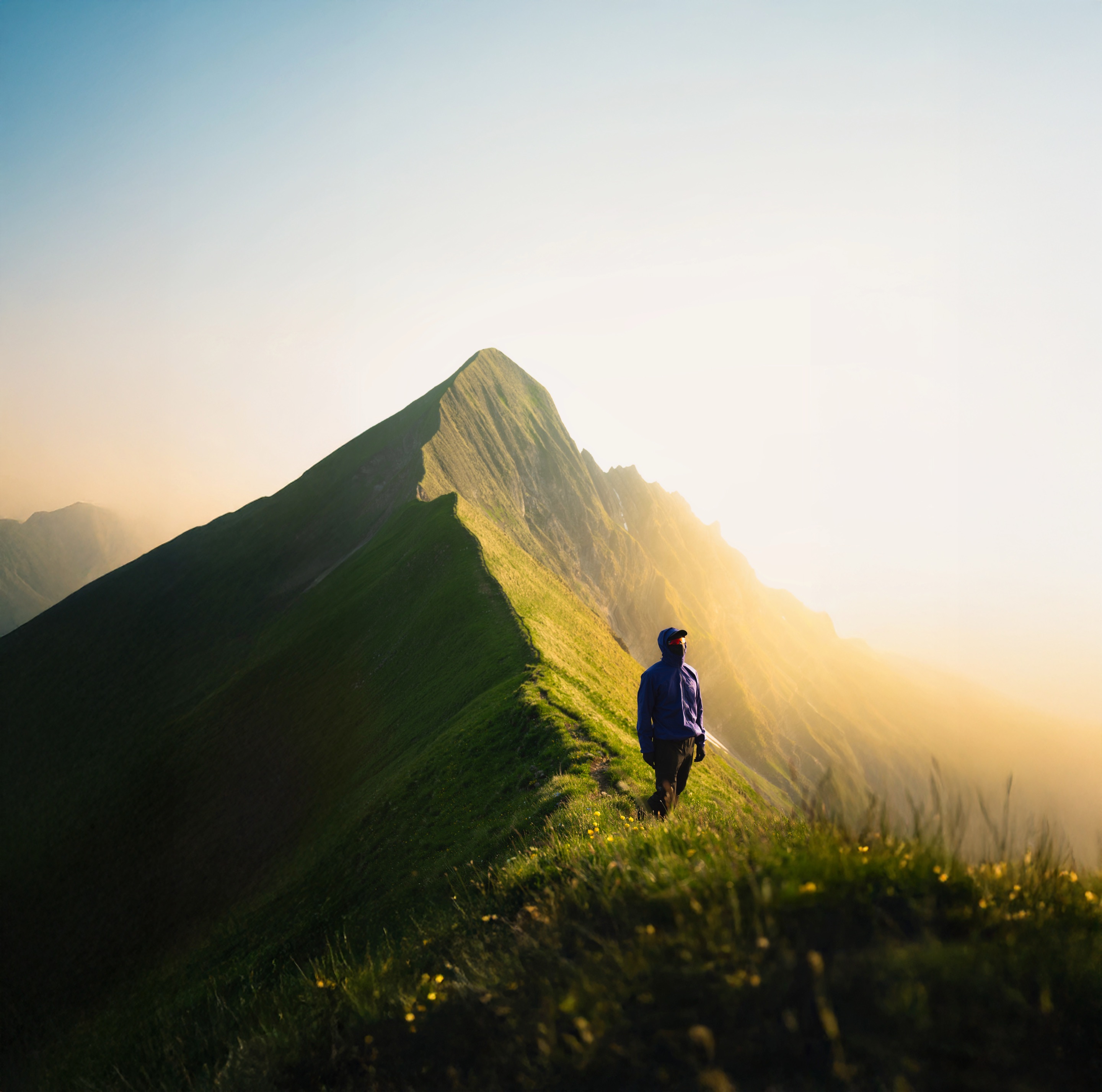
A bivouac is one night out with the minimum: a sleeping bag, a mat, a bivvy sack or a small tarp, and enough discipline to be gone before the day starts. Not a base camp, not a festival. It is the cheapest way there is to wake up above the clouds. It is also the fastest way to spend a miserable, shivering night if you get three or four small things wrong. This is the practical companion to our explainer on what the SAC rule actually allows: that one covers where you may sleep, this one covers how to do it well.
One quick clarification first. Most people use "wild camping" and "bivouacking" for the same thing, but in Switzerland the two are treated differently, and it decides whether your night is tolerated or fined. The two-minute version is here: wild camping vs bivouacking.
This is practical field knowledge, not legal advice and not a mountain-safety course. The Alps carry real risk. Weather, cold, terrain and rockfall are your responsibility, and gear ratings are guidance, not guarantees. For where a bivouac is permitted, read the law explainer. We call on no one to break any rule.
The three pieces of kit that keep you warm
Most cold nights are not a sleeping-bag problem. They are a ground problem. You lose heat downward into cold earth or rock far faster than you lose it to the air, and a sleeping bag crushes flat under your body, so it insulates almost nothing beneath you. The mat does that job.
A mat's warmth is measured as its R-value, its resistance to heat flowing through to the cold ground. Since 2020 the outdoor industry has used one shared test, ASTM F3340, so an R-value on one brand's mat now means the same as on another's1. Higher is warmer. For a summer bivouac in the Alps, aim for an R-value of 3 or more; for shoulder season or a spot on snow or bare rock, go higher. This single number is the cheapest upgrade to a cold sleeper's night.
The sleeping bag is rated to a different standard, ISO 23537, which prints three temperatures on the label. The comfort rating is the one that matters for most people: the temperature at which a "standard" cold sleeper stays comfortable. The limit rating is survival-adjacent, a curled-up night without much sleep, and the extreme rating is a hypothermia-avoidance figure you never plan around2. For an Alpine summer bivouac, a bag with a comfort rating around freezing, ideally a few degrees below, covers you. Read the comfort number, not the marketing name on the front.
The third piece is a breathable bivvy sack, a thin waterproof shell you slide the bag into. Its job is not warmth, it is keeping the dew off. Above the treeline on a clear night, everything you own is wet by dawn, and a soaked down bag is a cold bag. A bivvy sack with a light tarp is the classic minimal setup.
The body-heat tricks that cost nothing
Gear sets the ceiling, habits decide whether you reach it. A few that reliably work, several of them from Transa's own bivouac guide3:
- Never climb into the bag cold. Do a few minutes of movement, ten squats, a short walk, until you are warm, then get in. Your body heats the bag, the bag does not heat you.
- Eat before bed, warm and fatty if you can. Digestion is metabolic fuel through the night. Going to sleep hungry is going to sleep cold.
- Make a hot-water bottle. Fill your drinking bottle with warm water and take it into the bag. A leak-proof bottle at your core or feet buys hours.
- Get out of damp layers. Sweat-soaked base layers pull heat off you all night. Change into a dry set to sleep, or at least wring out and re-layer. A quick rinse in a cold lake before bed sounds mad but leaves you drier and warmer than stewing in salt-crusted kit.
How cold does it actually get
People plan for the valley forecast and then camp 1,500 metres above it. Air cools as you climb: the long-run average is about 6.5 °C lost per 1,000 metres of altitude, the same figure aviation uses as its standard-atmosphere reference4. So a mild 22 °C afternoon in Interlaken is closer to 12 °C at a 2,500-metre bivouac before the sun even sets.
Then the sun goes, and on a clear, still night the ground radiates its heat straight to the sky and the temperature keeps falling. A thin skin of ice on the rocks by dawn is normal at altitude in high summer. Plan for a night near or below freezing above roughly 2,000 metres even in July, which is exactly why the mat R-value and the bag comfort rating above are not places to save money. Check the mountain forecast on MeteoSwiss for your actual altitude before you commit5.
A roof over your head: tarp or tent
If no rain is forecast and the wind is light, a tarp is all you need, and it is lighter, cheaper and airier than a tent. Above the treeline you pitch it with trekking poles, since there are no trees to tie off to. The moment the forecast turns, though, a tarp gets grim fast: wind-driven rain comes in sideways and there is nothing between you and it. For anything longer than a settled-weather single night, a small tent earns its weight3.
Either way your enemy inside is condensation. Your breathing and any cooking dump a surprising amount of water into the air, and it lands on the fabric and drips back onto your bag. The fix is ventilation: open the vents, leave a gap, aim for a light draught moving through. A slightly breezy pitch sleeps drier than a sealed, cosy one.
Water and food
Carry food that is poor in water, because water is the heavy part. Risotto, couscous and polenta all cook up from almost nothing and pack tiny. Freeze-dried trekking meals go further still. The catch is that all of them need water on site, so you plan the bivouac near a stream or an alpine lake3.
Do not assume that water is safe just because it is clear and cold and high up. Even pristine-looking Alpine streams can carry Giardia and other bugs from livestock and wildlife upstream, and the cysts survive cold and shrug off a quick chemical dose6. Treat it: a filter rated to 1 micron or finer removes Giardia and Cryptosporidium, and boiling for one minute kills everything. A small squeeze filter weighs almost nothing and settles the question. If you are drawing straight from a spring at the source, above any pasture, the risk is low, but a filter is cheap insurance.
How to save weight
Weight is not one big cut, it is fifty small ones. The single biggest lever is simply leaving things at home: eat straight from the pan and skip the plate and cutlery, take one warm layer not three, decant toiletries into tiny bottles. Beyond that, most gear now comes in a lighter variant, and shaving a few grams off many items adds up to a pack you actually enjoy carrying uphill at the end of the day3. A comfortable bivouac is a light one.
The core kit, in one list
Sleeping mat (R-value 3 or more), sleeping bag (comfort rating around freezing), breathable bivvy sack, tarp or small tent, gas stove and lighter, headlamp, water filter, a dry-bag or waterproof pack liner for shoes and clothing overnight, warm layer, food that is poor in water, and a way to call for help.
Choosing the spot
A good bivouac site is sheltered from the wind, not in a dip where rain and cold air pool, and within reach of water, but with your toilet business kept well away from it. Above the treeline is both the legal sweet spot and the practical one: thin soil, no fragile forest floor, and the ground the SAC treats as unproblematic for a considerate single night7.
The one check people skip is the map. Before you fix on a spot, open map.geo.admin.ch and switch on the layers for wildlife rest zones, the federal hunting ban districts and the Swiss National Park8. If your spot sits inside one of those, the bivouac is off, and the map is the only way to know before you have carried a full pack up there. The full picture of which zones apply, and the three cantons that add their own rules, is in the law explainer.
High up: the specific risks
The higher you sleep, the more the terrain itself becomes the hazard. In daylight a slope reads as obvious. At 2 a.m., half-asleep and stepping out to relieve yourself, it does not, and a fall in the dark is the classic Alpine bivouac accident. This is the real reason a headlamp is non-negotiable, not the reading light, the not-walking-off-a-ledge light. Know where the drop is before dark, and keep your gear where you will not kick it downhill.
Rockfall is the other one. Don't pitch directly under a loose face or a couloir. Where you can, bivouac near a mountain hut or an emergency bivouac shelter, so that if the weather collapses in the night you have somewhere solid to retreat to7. The mountains are unforgiving of a bad forecast, and a plan B fifty metres away changes everything.
Going solo, and calling for help
Bivouacking alone is one of the quietest, best things you can do in the mountains, and it removes your margin for error, so you buy the margin back with a plan. Tell someone your route and your expected check-in times, and actually check in. That single habit is what turns a twisted ankle from a night of guessing into a known, findable problem.
In Switzerland, if you have phone reception, you reach mountain rescue through Rega on 1414, or better through the free Rega app, which transmits your coordinates with one swipe so the crew knows where to fly9. The problem is that reception in the mountains is patchy and impossible to predict, which is why a bivvy in a deep valley can be a dead zone.
For genuinely remote or multi-day solo tours, a satellite messenger like the Garmin inReach is the honest answer. It works off the Iridium satellite network rather than the mobile grid, so it sends two-way text and an SOS from places with no phone signal at all10. It needs a subscription, and it is the difference between "I told someone roughly where I'd be" and "I can call for help from anywhere."
The rules that do not bend
Everything above is about your comfort and safety. This part is about leaving the place exactly as you found it, which is the whole social contract that keeps bivouacking tolerated in Switzerland at all. None of it is optional.
- No fire. An open fire has no place in the mountains. A gas stove is enough, and even that is off the table when the canton posts a high fire-danger level, which you check on waldbrandgefahr.ch11.
- Pitch late, strike early. Set up towards evening, be gone again early. A bivouac is one night, not a base camp.
- Leave no rubbish. Everything you carry up you carry down, organic scraps and toilet paper included. Pack it in, pack it out is a Leave No Trace principle and, for waste, Swiss federal law12.
- At least 50 metres from any water for the big business. The SAC's own guidance is to keep that distance, dig a small hole about 15 cm deep, cover it, and carry the paper out, so you do not foul what people and livestock drink downstream7.
- Stay small and quiet. A small group, no speaker, no drone, dogs on the lead. Animals are most active at dusk and dawn, so keep the noise down, and if there is alp staff nearby, their word goes.
Is it even allowed?
Short version: a single night bivouacking above the treeline is tolerated in most of Switzerland, resting on the access right of Civil Code Art. 699 plus the SAC code of conduct, and it is forbidden in the Swiss National Park, in the federal hunting ban districts, in wildlife rest zones during the protection season, and in cantonal nature reserves13. Three cantons, Ticino, Valais and Graubünden, add stricter rules. The full breakdown, with the map layers and the fines, is the whole point of the law explainer, and for named lakes there are honest verdicts in the famous-spots piece.
Common questions
What gear do I actually need to bivouac?
How cold does it get at night in the Swiss Alps in summer?
Can I drink the water from Swiss mountain streams?
Tarp or tent for a bivouac?
How do I call for help with no phone reception?
Leon Helg
Swiss filmmaker and software developer. Has bivouacked across the Swiss mountains for years and mapped for Hikebeast for five, 141 spots documented. Posts as @leon.helg on Instagram and TikTok.
Sources
- ASTM F3340, the standardised R-value test for sleeping pads, developed by a manufacturer group led by Therm-a-Rest and adopted across the outdoor industry in 2020. Cascade Designs (Therm-a-Rest), "Rating sleeping pad insulation: the ASTM R-value standard". cascadedesigns.com. ↩
- ISO 23537-1, thermal requirements for sleeping bags, defining the comfort, limit and extreme temperature ratings via a heated manikin. International Organization for Standardization. iso.org (ISO 23537-1); plain-language explainer: Mountain Equipment, "Sleeping bag temperature ratings explained". mountain-equipment.com. ↩
- Transa, "Bivouacking: questions and answers" (ten tips for bivouacking), by Silas, sales consultant at Transa Europaallee, photos by Ruedi Thomi. Published 7 May 2024, updated 10 March 2026. Source for the body-heat tips, the tarp-versus-tent call, the water-poor meals and the pack-light advice. transa.ch. ↩
- Environmental (normal) lapse rate, the average fall of air temperature with altitude, about 6.5 °C per 1,000 m, also the International Standard Atmosphere reference. Encyclopaedia Britannica, "Normal lapse rate". britannica.com. ↩
- MeteoSwiss, the Federal Office of Meteorology and Climatology, mountain and altitude-specific weather forecasts. meteoswiss.admin.ch. ↩
- Water treatment when hiking and camping: a filter rated to 1 micron or finer removes Giardia and Cryptosporidium, and boiling for one minute kills pathogens. Cysts survive cold and resist quick chemical treatment. US Centers for Disease Control and Prevention (CDC), "Water treatment options when hiking, camping, or traveling". cdc.gov. ↩
- Swiss Alpine Club (SAC), information sheet "Camping and bivouacking in the Swiss mountains": a single considerate night above the treeline is usually unproblematic, keep at least 50 m from water, dig a hole about 15 cm deep and pack out the paper, use existing fire sites only, respect wildlife at dusk, and bivouac near a hut where possible. sac-cas.ch. ↩
- FOEN geoportal map.geo.admin.ch, with the layers "wildlife rest zones", "federal hunting ban districts" and "Swiss National Park" to check a spot before you go. map.geo.admin.ch. ↩
- Swiss Air-Rescue Rega, emergency number 1414 and the free Rega app, which transmits your coordinates to the operations centre with one swipe. rega.ch/en/emergency-number-1414. ↩
- Garmin inReach satellite communicator: two-way text and SOS over the Iridium satellite network, independent of mobile-phone coverage, subscription required. garmin.com (inReach Messenger). ↩
- Swiss platform Waldbrandgefahr.ch, current forest-fire-danger level per canton (1 to 5); at high levels open fires and, in some cantons, gas stoves near vegetation are banned. waldbrandgefahr.ch. ↩
- Leave No Trace, the seven principles, including "pack it in, pack it out" and disposing of human waste in a cathole away from water. Leave No Trace Center for Outdoor Ethics. lnt.org. Correct waste disposal is also a duty under the Swiss Environmental Protection Act (USG). ↩
- Swiss Civil Code (ZGB) Art. 699, "entering forest and pasture", the access right the bivouac tolerance rests on. fedlex.admin.ch. Full breakdown of protected areas and cantonal rules in the Hikebeast law explainer. ↩