The 7 rules of wild camping
Follow these seven and you will never be the reason a spot gets closed. Most wild camping bans exist because people ignored them.
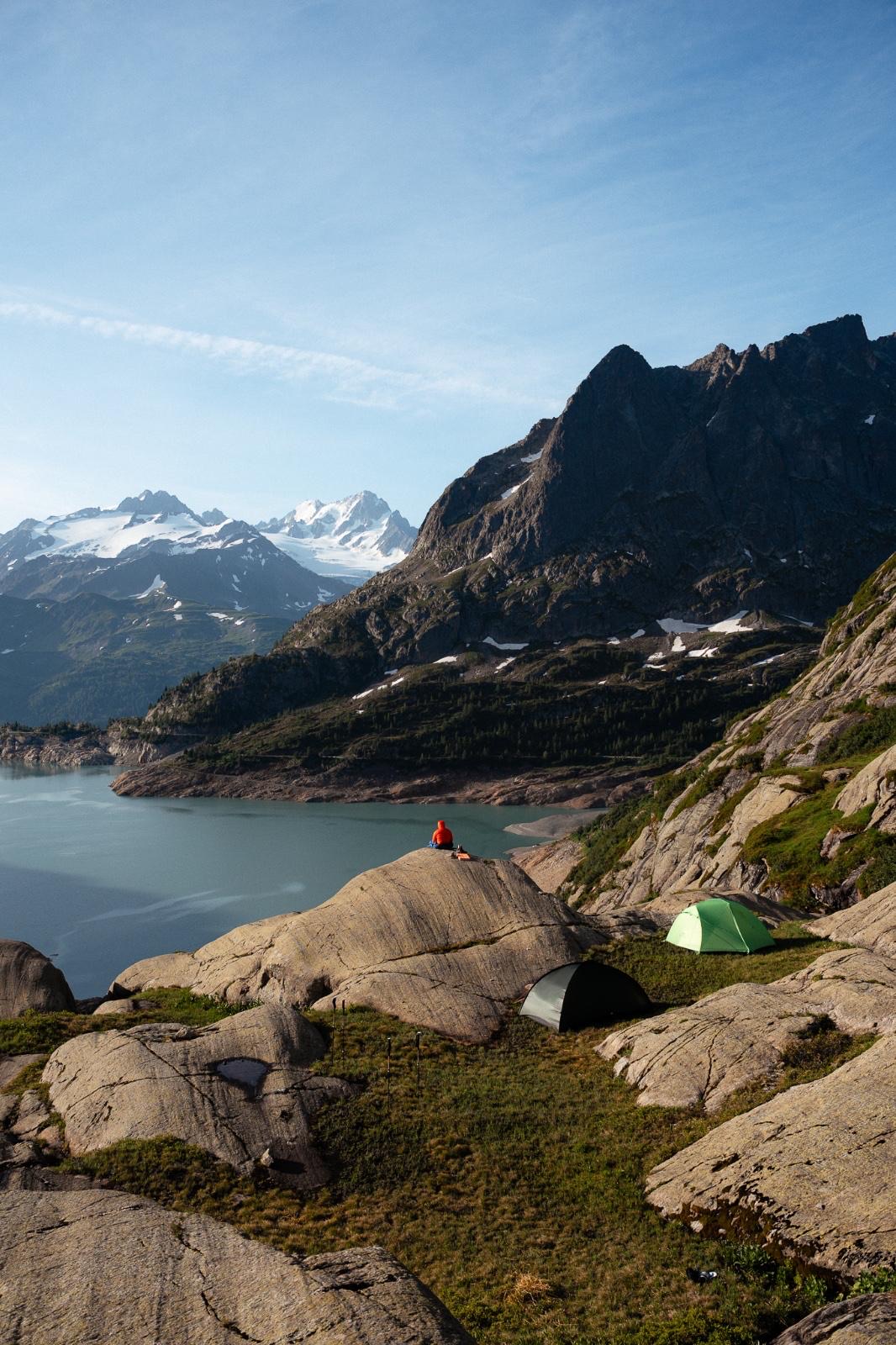
Wild camping and bivouacking survive on goodwill. There is no big authority handing out permits, just farmers, gamekeepers and everyone who walks past the morning after. Break the trust and the sign goes up: no camping. Keep it and the spot stays open for the next person. These are the seven rules that keep the trust intact.
1. Check the legality first
Before you pick a spot, know whether you are allowed to sleep there. The fastest way: type the spot into our free Wildcamping Legality Checker, which shows the published legality report instantly or kicks off a free deep analysis. Not every lake, not every meadow, and the rules change canton by canton and municipality by municipality. Read our plain guide to what Swiss law actually allows, and check the official map at map.geo.admin.ch for the hunting ban districts and wildlife rest zones that lift the tolerance3. Every spot in the Hikebeast Swiss Gems guide already carries its wild camping status, so you do not have to guess. Five minutes of checking saves you a fine, and it saves the spot for the person after you. This is doubly true if you are unsure: when in doubt, treat it as a place where you keep a low profile.
2. Pitch after sunset, pack up at sunrise
Arrive late, leave early. A bivouac is one night, not a base camp. This matters most exactly when you are not certain about the legality: a tent that goes up at dusk and is gone before the first hiker walks past bothers nobody and is barely camping at all. The access right in Civil Code Art. 699 covers passing through and a considerate overnight, not a pitched camp that sits there all day2. It is also the difference between watching the sunrise alone and explaining yourself to a farmer over breakfast.
3. Leave no trace
Wild camping gets banned when people leave rubbish, fire rings and flattened grass behind. So the rule is simple: everything you carry up, you carry back down, food scraps and toilet paper included. In Switzerland that is not just etiquette, it is federal law under the Environmental Protection Act5. Better still, leave the place cleaner than you found it. Pick up the bottle cap that was not yours. That is a good rule for a campsite, and honestly a good rule for life.
4. Do not make a fire
An open fire has no place in the mountains. The scar in the grass lasts for years, a dry summer turns one spark into a real hazard, and from fire-hazard level 4 the cantons ban open fire outright6. The animals around you want neither the light nor the smoke either4. A small gas stove does everything you actually need for a warm meal and a coffee. No fire. The animals will thank you.
5. Leave the speaker at home
No Bluetooth speaker. You climbed up here for the quiet, and so did the deer, the ibex and the birds settling in for the night. Sound travels a long way across a still valley after dark, much further than you think, and the whole point of the high country is that it is calm. Keep your music in your headphones. The animals will thank you for this one too.
6. If you get caught, be kind
Rangers and gamekeepers are not out to ruin your evening. They care about the exact same nature you came up to sleep in, and most of them have spent their lives protecting it. If one asks you to pack up and move on, do it, say thank you, and mean it. The usual first reaction to a tidy, one-night camp is a warning, not a fine7, and a calm, friendly conversation almost always ends better than a defensive one. Being decent in that moment is a big part of why the next person is still allowed to be there.
7. Carry a trowel and dig a hole
For the big business, walk at least 50 metres away from any stream or lake, dig a hole about 20 centimetres deep, do your thing, and bury it1. Pack the paper out in a bag, do not leave it weighted under a rock. It sounds like a small, unglamorous detail. It is not: it is the line between a clean alp and a fouled one, and it is exactly what the people and the cattle downstream are drinking. Take the trowel. It matters more than any other rule on this list.
In short
Seven rules, one idea behind all of them: be a guest. Check first, arrive late and leave early, take everything home, no fire, no noise, be kind to the people who look after the place, and deal with your waste properly. Do that and wild camping stays possible for everybody. Ignore it, and one more lake gets a no-camping sign.
Common questions
What are the rules of wild camping?
Is wild camping legal in Switzerland?
Can I light a campfire when wild camping?
How do I go to the toilet when wild camping?
What should I do if a ranger finds me?
Leon Helg
Swiss filmmaker and software developer. Has hiked in the Swiss mountains forever, has been mapping for Hikebeast for five years, 141 spots documented. Posts as @leon.helg on Instagram and TikTok.
Sources
- Swiss Alpine Club (SAC), information sheet "Camping and bivouacking in the Swiss mountains": camp considerately, contaminate no water, keep at least 50 metres from any body of water when relieving yourself. sac-cas.ch. ↩
- Swiss Civil Code (ZGB), Article 699 "Entering forest and pasture", the access right the bivouac tolerance rests on. fedlex.admin.ch. ↩
- FOEN geoportal map.geo.admin.ch with the layers "wildlife rest zones", "federal hunting ban districts", "Swiss National Park" and "BLN areas", for checking whether a spot is free. map.geo.admin.ch. ↩
- FOEN, "Wildlife rest zones and wildlife corridors": undisturbed peace for cloven-hoofed game and grouse is the reason to avoid fire, light and noise. bafu.admin.ch. ↩
- Federal Environmental Protection Act (USG), Article 30 "Principles": waste, including organic scraps and toilet paper, must be disposed of correctly. Pack in, pack out is federal law. fedlex.admin.ch. ↩
- Swiss platform Waldbrandgefahr.ch, current fire-hazard levels per canton (1 to 5); from level 4 the cantons issue open-fire bans in and near forest. waldbrandgefahr.ch. ↩
- Beobachter, "Where wild camping is allowed and where not": the first reaction is usually a request to move on, with fines for repeat offences, fire pits, rubbish or protected areas. beobachter.ch. ↩