Wild camping at Meglisalp
A bivouac at Meglisalp is not prohibited, but the alp's posted rules say you have to get the landowner's consent first. The alp is lived on, worked and milked right through the summer, so a night here is not really wild. The only ground here that takes a tent lies about 180 metres south-south-west.
What do these mean?
Illegal A specific rule bans it, usually with a fine, and it can be enforced. Sleep somewhere else.
Not allowed No real place to camp here. A gated site, a developed area, or nowhere sensible to lie down, even if no fine is attached.
It depends You can sleep here, but there's a condition first: ask the landowner, book a spot, stay inside a set zone, or use a bivvy instead of a tent. The report says which.
Tolerated No rule clearly allows or bans it, but a single night is accepted in practice and nobody enforces against it. Normal for high bivouacs above the treeline.
Legal Camping one night is fine here. Either a rule allows it, or we checked every law and found nothing against it. Still: pitch late, leave early, no trace.
The Appenzell rule, and why we still say no
Wild camping at Meglisalp starts from an unusually permissive position and ends somewhere most legal write-ups do not. Appenzell Innerrhoden is one of the very few Swiss cantons where camping outside a licensed site is regulated but not punished, and the operative provision is a single paragraph from 1973.
"Das gelegentliche Aufstellen von einzelnen Wohnwagen und Zelten ausserhalb bewilligter Campingplätze darf die Dauer eines Monats pro Jahr nicht überschreiten und ist an die Zustimmung des betreffenden Grundeigentümers gebunden."Campingverordnung (GS 935.610), art. 4: the occasional erection of individual caravans and tents outside licensed campsites may not exceed one month a year and is tied to the consent of the landowner concerned.
Two things follow at once. The route is the landowner's yes, and here that is a legal requirement rather than etiquette. And the article governs the erection of a caravan or a tent, so a tentless bivouac, which erects nothing, is not caught by art. 4 at all. No Appenzell enactment in force uses the word Biwakieren anywhere.1
There is no fine, and this time we can read that off the schedule instead of inferring it. The ordinance's penalty articles, arts. 11 to 15, were each repealed on 31 October 2005, which we re-checked in the ordinance's own table of amendments. The other half is new. The cantonal fixed-penalty ordinance does exist, we downloaded its consolidated text with annexes, and we read annex 1 in its version of 31 March 2025 from end to end. Its seven sections cover the contravention act, the nature and heritage ordinance, the forest act, the hunting ordinance, the new wildlife-rest ordinance, the fisheries ordinance and the dog and hospitality acts. There is no camping, tent or bivouac entry in any of them.2
What that schedule does tariff is worth carrying up the hill, because it is the part that can actually cost you money. Littering, meaning small waste left outside a waste facility, is CHF 100. Wilful noise at night is CHF 150, relieving yourself in public CHF 100, flying a drone anywhere in the Alpstein CHF 150, and leaving the marked path inside a cantonal wildlife-rest area during the closed season CHF 150. Sleeping appears on none of those lists.2
The canton says the same thing in its own words. Its 47-page report on camping tourism from June 2025 records that the camping ordinance contains no penal norm and that "für verbotenes Campieren ausserhalb der Campingzone besteht keine Strafmöglichkeit", for prohibited camping outside the camping zone no punishment is possible. Its government has held since 2020 that wild camping is not allowed but that a one-night bivouac with simple tents, agreed with the locally responsible Senn, can be tolerated, and in 2025 it wrote that the legal basis for a ban does not currently exist and would have to be drafted. The earliest realistic vote is 2028. Relevant to this spot in particular: that report names the Seealp, the Saxerlücke, the Sämtisersee, Bollenwees and the Kamor as its problem areas, and does not mention Meglisalp once.3
One sentence in the ordinance is a known soft spot, and we are not going to dress it up as a discovery. Art. 6 para. 3 applies the ordinance's zone restrictions to the consent route as well, and those exclude ground exposed to rockfall and areas of particular natural or heritage value. Both hooks are live here: the whole Inner Alpstein is federal landscape inventory object 1612, and the point itself carries an indicative hazard designation for rockfall and avalanche. It has never been tested, the canton's own legal analysis ignores it completely, and there is no sanction behind it either way. We record it for one reason: it is why nobody should write that Appenzell law positively permits tents in the Alpstein. The accurate line is that there is one rule, it is consent-based, and there is no fine.18
The commune adds nothing. Bezirk Schwende-Rüte publishes no Polizeireglement and no Campingreglement, and its Reglement über die Grundordnung, which we downloaded and searched, has no occurrence of Zelt, campieren, Camping, Biwak, übernachten or lagern. The reservation in art. 4 for special district enactments is empty here.5
And now the honest part, because the alp is more permissive than we are. The house rules for the Alpstein, which Meglisalp publishes and links from its own site, say it in three languages. The official English wording is: "No wild camping. Bivouacking permitted with the landlord's consent." The document is Appenzellerland Tourismus AI's rather than the alp's own, published by Meglisalp, and it is still the clearest plain-language statement of the consent route anywhere in this massif. So the law would let you ask, and the landowner's own posted rule would let you ask. Our answer is no anyway, and it has nothing to do with the statute book.9
The reserve is 604 metres up the path, and who holds this ground
The federal game reserve is the hard line in this massif, and at Meglisalp it is close. At the point itself the reserve layer comes back empty. The integral-protection zone of the Säntis reserve, object 16, begins 604 metres north-west on a bearing of 310 degrees. We computed that segment by segment from the full 1'074-vertex boundary and cross-checked it on the cantonal layer, which is empty 500 metres out and returns "Säntis, Objektnr. 16" at 700 metres. At the Schäfler the same boundary is 1'512 metres away. Here it is a quarter of that.6
And it lies straight across the way on. Meglisalp is a staging point, not an end point: the classic continuation climbs north-west towards Ober Mesmer, the Rotsteinpass and the Säntis flank, and that climb crosses the line. Inside it, art. 5 para. 1 lit. e VEJ prohibits free tenting and camping with no zone qualifier and no consent exception. The on-the-spot penalty is CHF 150 under annex 2 no. 12005 of the federal fixed-penalty ordinance, not the CHF 20'000 that gets quoted, which is the Hunting Act ceiling once a case leaves the summary procedure. Neither the canton's tolerance nor the alp's permission cures it. Only the canton may authorise an exception, and it has not. If you take one operational fact from this article, take that one.6
Appenzell's own wildlife-rest ordinance exists, it is new, and it does not reach here. It came into force on 1 July 2025 and creates exactly three areas: Chalberer, Marwees and Brugger Wald. Measured against this point, Marwees is about 1.0 kilometre east-north-east on the far side of the Widderalpstöck ridge, Chalberer three to six kilometres north-north-east, Brugger Wald 4.8 kilometres west-north-west. Even a hit would not have been a camping ban: the rule is to keep to signposted paths during the closed season, which can never begin before 15 December or end after 30 June, with a CHF 150 penalty. The warning for anyone checking their own Alpstein spot is different and more useful. The federal wildlife-rest-zone layer carries no Appenzell Innerrhoden zone at all. We pulled 161 features from a 30 kilometre box around this point and every one belongs to Appenzell Ausserrhoden, St. Gallen or Liechtenstein. A point query on the national map portal misses this entire ordinance, so the cantonal annex has to be read by hand.4
Whose ground it is, is unusually simple here. The cantonal alp register gives the same answer at all nine points we probed, from the guesthouse through the published point to 400 metres east and 700 metres north-west: Meglisalp, register no. 79, category Gemeinalp, a common alp. Unlike the Schäfler ridge, where the answer changes over 150 metres because two alps meet, there is no internal boundary to trip over here. One alp, one conversation.8
Who to ask, if you are asking. The reachable door is Berggasthaus Meglisalp, run by the Manser and Hersche families in the sixth generation, on +41 71 799 11 28 or info@meglisalp.ch, open in 2026 from 9 May to around 1 November. The corporate holder of the common alp, the Alpgenossenschaft Meglisalp, is named in the guesthouse's own history but publishes no contact we could find, so the guesthouse is the practical route. No fee is established. There is no named Senn here, no reported arrangement and no franc figure, and the amounts we publish for the Seealpsee and the Fälenalp belong to different arrangements on different ground and must not be carried across. One phone call would settle it.9
No fire, and right now that is not a guideline. The cantonal government extended the fire ban on 23 July 2026 with effect from Friday 24 July: no open fire in the forest or within 200 metres of it anywhere in the canton, plus a canton-wide ban on fireworks, Höhenfeuer and sky lanterns, issued by general order under art. 8 para. 4 of the cantonal fire protection act, backed by fines and valid until publicly revoked. Meglisalp is not in forest, but the Alpstein house rules settle it anyway: existing fireplaces only, no disposable grills, no fires in forest or on pasture. The same sheet bans drones, and so does cantonal hunting law across the whole Alpstein, at CHF 150.10
The reason for the verdict: you would be lying down in the hamlet
Start with the question that decides this one, and it is not a legal question. If sleeping here were entirely lawful, would anybody put a sleeping bag down on this exact ground? The measurements answer it. The point sits at 1'588.8 metres on a grass slope of 21 degrees, which is 38 percent, falling north-north-west. The nearest registered alp building is 92 metres away and the next one 99. There are 30 registered addresses inside a 400 metre box. The marked hiking trail runs 28 metres off. And the Berggasthaus, which sleeps up to 125 people, stands about 280 metres north-north-west and 70 metres below.7
This is a hamlet, not open mountain. Meglisalp is an Alpsiedlung in a shallow hollow at 1'517 metres, first documented in 1071, with a chapel, a mountain inn that has been in the same family since 1861 and a working dairy. In the alp's own words, cows, goats and pigs spend a ten-week alp summer here and alp cheese is made on site. Put a tent on that slope and you are lying in the pasture between the huts and the path, in sight of front doors, and you will be seen at both ends of the night.9
It is also below the treeline, which is our own standing rule rather than a Swiss statute. The whole bivouac culture this article sits inside, the alpine club's guidance included, lives above the treeline on open ground. Below it you are on farmed, grazed or inhabited land and you are a nuisance, and statutory silence does not change that. At 1'588.8 metres on a worked common alp, both halves are true at once.7
There is usable ground, and it does not change the answer. About 180 to 200 metres south-south-west, at roughly 1'615 metres on the pasture towards the Rotsteinpass, there is a small bench tilted only 1.3 to 2.3 degrees. That is where to go if you are going. But our verdict is about sleeping at the point we publish, and better ground a few hundred metres away is a tip and never the verdict. The bench is still grazed pasture in plain sight of the alp and of a trail 28 metres off, and the alp is inhabited all season, so a discreet unnoticed night is not the proposition here. Asking is. The flattest ground of all, 250 metres north-west at 1'516 metres and half a degree, is the hamlet floor itself, which is off the table for obvious reasons.7
Everything else on the map here is a chip, not a rule. A Landschaftsschutzzone overlay begins about 130 metres north of the point and covers the alp basin, and an Ortsbildschutzzone covers the buildings themselves. We ran both to ground: the building act only enables the designation, the cantonal nature and heritage ordinance reaches only building projects inside such overlays, and the commune's Grundordnung is silent on both. We also read that ordinance in full in its current version, and it contains no camping verb at all, no campieren, no Zelt, no Biwak, no übernachten, no lagern. The cantonal structure plan labels the area "Touristisches Kerngebiet", which binds authorities and not walkers. And the one area camping ban Appenzell does have, the mire landscape decree for the Schwägalp and the Fähnerenspitz, is 2'918 metres away at its nearest perimeter.58
Why this reads differently from our Seealpsee article, on purpose. The lake is 1.9 kilometres north-north-east of here and 448 metres lower, on the same classic route, and we publish it as "It depends". The difference is not the law, which is identical, but the route through it. At the Seealpsee there is a named Senn at the top end of the lake who is known to let people ask, with a word-of-mouth figure attached, so there is a concrete thing you can do that changes the answer. At Meglisalp there is no named person, no reported arrangement and no fee, and the point we carry sits inside the settlement rather than on a shore. Same canton, same ordinance, different ground.9
Where you can legally sleep
- Berggasthaus Meglisalp, about 280 metres from the point, +41 71 799 11 28, info@meglisalp.ch. Up to 125 places across rooms and dormitories, 2026 season from 9 May to around 1 November, cash preferred, plus CHF 2.50 visitor's tax a night. This is the answer the alp itself gives.
- The bench 180 to 200 metres south-south-west, at about 1'615 metres, with the alp's consent asked for in advance under art. 4 of the Campingverordnung. It is the only ground near here that takes a tent, and it is still grazed pasture in sight of the huts.
- Berggasthaus Mesmer, Rotsteinpass, Bollenwees, Seealpsee, Äscher and Ebenalp, all one to three hours away on the same massif, and all better answers than a tent in the pasture.
- Not the published point, on the 21 degree slope between the huts and the path.
- Not north-west up the climb. Six hundred metres that way you are inside the federal game reserve, where a tent is banned outright and nobody local can give you permission.
General rules for wild camping
This applies wherever you are genuinely allowed to sleep outside, which in the Alpstein means with the alp's yes and well away from the huts. It is not legal text, it is decency and common sense, and on a massif that carries about a quarter of the canton's overnight stays it is the reason the tolerance still exists at all.
- No fire. An open fire has no place in the mountains. A gas stove is enough.
- Pitch late, strike early. Set up towards evening, gone again early. A bivouac is one night, not a base camp.
- Leave no rubbish. Everything you carry up you carry down, organic scraps and toilet paper included.
- At least 50 metres from any water for the big business, so you do not foul what people and livestock drink.
- Stay small and quiet. A small group, no speaker, no drone, dogs on the lead, and the alp staff's word goes.
Disclaimer
This article reflects my research and assessment to the best of my knowledge, as of July 2026. It is based on the publicly accessible and official sources linked below. It does not replace legal advice and is not a binding statement of the current legal situation.
Appenzell Innerrhoden enacted a new wildlife rest zone ordinance in July 2025, its commune structure changed in 2022, and a cantonal fire ban has been in force since 24 July 2026, so material written about this area earlier may be out of date, and the federal map layer does not carry the cantonal wildlife zones at all. Before every tour, check the current sources yourself, get the landowner's consent, and follow instructions on site. A genuine emergency bivouac in distress is a separate question from a planned camp. Anyone who spends the night outside bears responsibility for their own conduct and any consequences themselves. Hikebeast, Leon Helg and Saftladen GmbH accept no liability for decisions made on the basis of this text, and call on no one to break applicable law.
Frequently asked questions
Is wild camping allowed at Meglisalp?
Is there a fine for wild camping in Appenzell Innerrhoden?
Can you ask for permission at Meglisalp, and what does it cost?
How far is the federal game reserve from Meglisalp?
Does the rule catch a bivouac without a tent?
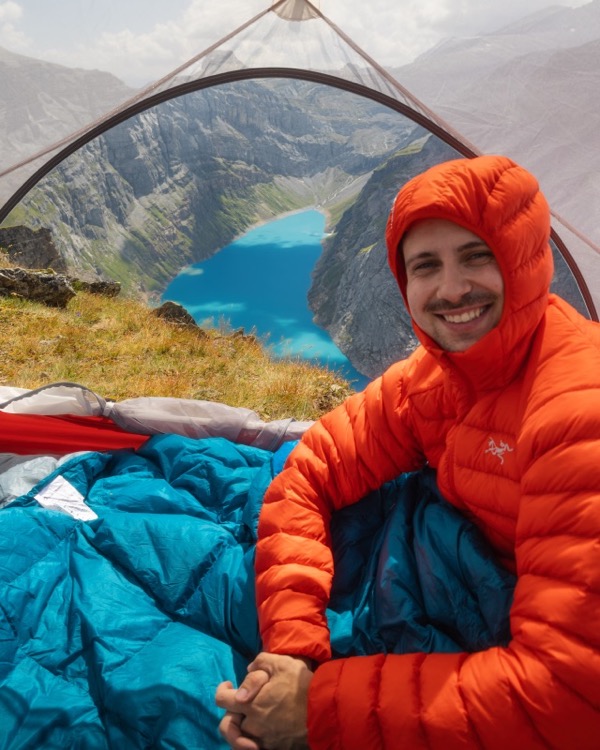
Leon Helg
Swiss filmmaker and software developer. Spends his free time in the Swiss Alps and maps his favourite spots for Hikebeast. Posts as @leon.helg on Instagram and TikTok.
Sources
- Campingverordnung des Kantons Appenzell Innerrhoden (GS 935.610), original of 12 June 1973, current version in force since 1 January 2013, not abrogated, read in full consolidated text. Art. 4: the occasional erection of individual caravans and tents outside licensed campsites may not exceed one month per year and is tied to the consent of the landowner concerned, with special enactments of the district authorities reserved. The operative verb is the erection of a tent or caravan, so a tentless bivouac is not caught, and no Appenzell enactment in force uses the word Biwakieren. Art. 6 para. 2 excludes camping zones in the immediate vicinity of churches, schools, institutions and busy roads and squares, in areas endangered by flooding or rockfall, in areas unsuitable by their nature, and in areas of particular value on grounds of nature or heritage protection; art. 6 para. 3 applies those provisions by analogy to art. 4. That analogy has never been tested, is absent from the canton's own legal analysis of bivouacking, and carries no sanction either way, which is precisely why the safe statement is "one rule, consent-based, no fine" and never "Appenzell law permits tents". Arts. 11 to 15, the penalty provisions, are each listed in the ordinance's own Änderungstabelle as repealed on 31 October 2005. ai.clex.ch. ↩
- Verordnung über die Ordnungsbussen des Kantons Appenzell Innerrhoden (VOB, GS 311.010) of 20 June 2022, version in force 1 July 2025. The consolidated PDF with annexes was downloaded and annex 1, in its version of 31 March 2025, was read in full. Its seven sections cover the Übertretungsstrafgesetz (GS 311.000), the Verordnung über den Natur- und Heimatschutz (GS 450.010), the Einführungsgesetz zum Waldgesetz (GS 921.000), the Verordnung zum Jagdgesetz (GS 922.010), the Wildruheverordnung (GS 922.012), the Fischereiverordnung (GS 923.010), the Hundegesetz (GS 560.100) and the Gastgewerbegesetz (GS 935.300). None of them contains a camping, tent or bivouac entry. The entries a person sleeping outside can realistically trigger are: littering and small waste left outside a waste facility, CHF 100 (no. 1.2, art. 7 Übertretungsstrafgesetz); soiling or defacing another's property, CHF 100 (no. 1.1); wilful noise at night, CHF 150 (no. 1.7, art. 15); relieving oneself in public, CHF 100 (no. 1.9); flying a drone, CHF 150 (no. 4.1, the Alpstein-wide drone ban in the hunting ordinance); and leaving the marked path inside a cantonal wildlife-rest area during the closed season, CHF 150 (no. 4a.1). This closes an open item in our own Alpstein dossier, which had recorded this ordinance as not found, so the absence of a camping fine in Appenzell Innerrhoden is now a positive read of the complete schedule rather than an inference from the 2005 repeal. ai.clex.ch. ↩
- Canton of Appenzell Innerrhoden, Bericht Massnahme B4 "Camping-Tourismus", June 2025, ref. AI 840.02-3-1307066, 47 pages, downloaded and searched in full. Ch. 5.2: "Die Campingverordnung (GS 935.610) enthält keine Strafnorm. Zwar greifen indirekt die Strafnormen des Baugesetzes und des Gastgewerbegesetzes. Die Strafnormen gelten allerdings nur beschränkt. Für verbotenes Campieren ausserhalb der Campingzone besteht keine Strafmöglichkeit." Ch. 7.7 describes present practice as bivouackers being tolerated but not encouraged, and the recommended measure B4.4 would allow a permitted bivouac only near inhabited houses or mountain and alp businesses, so proximity to an alp is the licence condition in the canton's own draft rather than a disqualifier. The report's named problem areas are the Seealp, the Saxerlücke, the Sämtisersee, Bollenwees and the Kamor; the string Meglisalp does not occur in the document at all, against 63 occurrences of Biwak, 8 of Saxerlücke and 4 of Seealp. Standeskommission release of 2020: wild camping is not allowed, but "das Biwakieren mit einfachen Zelten über Nacht in Absprache mit den örtlich zuständigen Sennen" can be tolerated until further notice, and the canton is the largest landowner in the Alpstein. Standeskommission release of 2025: a general ban is preferred, but "die diesbezügliche gesetzliche Grundlage ist momentan nicht vorhanden und soll deshalb erarbeitet werden". Nothing has entered into force, and the earliest realistic popular vote is 2028. ai.ch. ↩
- Wildruheverordnung des Kantons Appenzell Innerrhoden (GS 922.012) of 31 March 2025, in force since 1 July 2025; the consolidated PDF with its annex maps was downloaded. Art. 4 requires walkers to keep to the officially signposted paths and routes during the closed seasons; art. 3 para. 2 sets those seasons to begin no earlier than 15 December and end no later than 30 June; the fine is tariffed at CHF 150 in annex 1 no. 4a.1 of the cantonal fixed-penalty ordinance, with the hunting administration, the game wardens and the forestry staff as enforcement organs. Annex 1 creates three areas only: Chalberer, Marwees and Brugger Wald. No vector layer for them is published on either the federal or the cantonal portal, so the annex sheets were rendered at 400 dpi and georeferenced against their own 1 km graticule, a fit validated against the Seealpsee polygon centroid to within about 30 m. Measured from the published point: Marwees about 1'007 m east-north-east on the far side of the Widderalpstöck ridge, Chalberer roughly three to six kilometres north-north-east, Brugger Wald 4'839 m west-north-west. All three margins are far larger than the fit error. Separately, an envelope query on the federal wildlife-rest-zone layer over a 30 km box around the point returns 161 features, every one of them in Appenzell Ausserrhoden, St. Gallen or Liechtenstein, and no Appenzell Innerrhoden zone at all; the nearest federal zone, Schofberg no. 104.0, is 3'771 m away. A federal-only check on an Appenzell Innerrhoden point is therefore a false negative. ai.clex.ch. ↩
- Norms checked against a single night at this point and found not to reach it. Baugesetz AI (GS 700.000) art. 32 confines the "länger dauernde" pitching of caravans, motorhomes and tents to camping zones, which one night is not, and its penalty article 91 is addressed to building owners, landowners, site managers, contractors and their agents, none of which a walker is; arts. 39 and 40 only enable the landscape and townscape protection overlays without creating any conduct rule. Verordnung über den Natur- und Heimatschutz (GS 450.010), version of 1 April 2026, was read in full and contains no occurrence of campieren, Camping, Zelt, Biwak, übernachten, lagern or Betreten; its art. 36 para. 3 reaches building projects inside the protection overlays only. Standeskommissionsbeschluss über die Moorlandschaften Schwägalp und Fähnerenspitz (GS 454.001) art. 5 para. 4 does prohibit camping, with a fine under art. 24 and with no tent qualifier, so it would catch a tentless bivouac, but art. 1 para. 2 confines it to the two perimeters of 31 October 2000, the nearer of which lies 2'918 m west-north-west. Bezirk Schwende-Rüte publishes no Polizeireglement and no Campingreglement; its Reglement über die Grundordnung was downloaded and searched, with no hit for Zelt, campier, Camping, Biwak, übernacht or lagern. Contact: Bezirk Schwende-Rüte, 071 788 99 30, info@schwende-ruete.ai.ch. ai.clex.ch. ↩
- Official federal geodata, queried 30 July 2026 at LV95 2'747'514 / 1'235'480 (WGS84 47.253746 / 9.387575). Every layer was queried individually and each empty result confirmed to come from a valid layer id, with two deliberately invalid ids returning HTTP 400 as a control. The game reserve, wildlife-rest-zone, raised bog, fen, mire landscape, floodplain, amphibian, dry grassland, national park, Emerald, forest reserve and bird reserve layers all return empty at the point. The landscape inventory returns object 1338 Säntisgebiet, BLN 1612, which binds authorities under art. 6 NHG (SR 451) and imposes no rule on a camper. Distances were computed segment by segment from the full 1'074-vertex geometry of game reserve object 16 Säntis: the Gebiet mit integralen Schutzbestimmungen, which is the perimeter that matters, lies 604 m from the point on a bearing of 310 degrees, closest boundary point 2'747'054 / 1'235'872, while the Wildschadenperimeter, which carries no conduct rules at all, is 3'038 m north-north-west. Sampling along the bearing puts the point outside at 566 m and inside at 850 m, and the cantonal reserve layer is empty at 500 m and returns "Säntis, Objektnr. 16, Kategorie I, Fläche 2594.25 ha" at 700 m. Inside the reserve art. 5 para. 1 lit. e VEJ (SR 922.31) prohibits free tenting and camping, the fixed penalty is CHF 150 under annex 2 no. 12005 of the federal fixed-penalty ordinance (SR 314.11), the CHF 20'000 figure is the ceiling under art. 18 of the Hunting Act (SR 922.0) in ordinary proceedings only, and only the canton may authorise an exception. map.geo.admin.ch. ↩
- Terrain and settlement, sampled 30 July 2026 at the published point. Elevation 1'588.8 m. Slope over a 40 m span 20.8 degrees, that is 38 percent, falling north-north-west with an aspect of 347 degrees. Land cover is open grazed alp pasture with scattered boulders, and all three cantonal forest layers are empty here, so this is not forest, it is simply below the treeline. Nearest registered building 92 m (Meglisalp 13a), second 99 m; 30 registered addresses inside a 400 m box; nearest official hiking trail from swissTLM3D 28 m; Berggasthaus Meglisalp at 1'517 m about 279 m north-north-west. The flattest ground within 200 m is a bench 180 to 200 m south-south-west at about 1'615 m with a slope of 1.3 to 2.3 degrees, on the pasture towards the Rotsteinpass; the flattest ground overall nearby is the alp floor itself, 250 m north-west at 1'516 m and 0.5 degrees, which is the hamlet and its working pasture. The published point is a gazetteer area centroid rather than a camp placement, and no pin move is proposed: the commune, the land-use zone and the alp register entry are identical across the whole basin, so the analysis does not change with the exact metre. map.geo.admin.ch. ↩
- Cantonal and communal geodata via geoportal.ch GetFeatureInfo in EPSG:2056, every absence paired with two positive controls, the cantonal reserve layer deep inside the Säntis reserve and the zoning set in Appenzell village, plus one bogus layer as a negative control. Alpkataster Kt AI: Alpname Meglisalp, Kataster no. 79, Alpkategorie Gemeinalp, Bewirtschafter Kanton AI, legally in force, returned identically at all nine points probed from the guesthouse through the published point to 400 m east and 700 m north-west. Land-use zone: Sömmerungsgebietszone (S), CH code 29, cantonal code 2901, legally in force, BFS 3112. Cantonal structure plan: "Touristisches Kerngebiet", plus avalanche, rockfall, landslide and water designations, binding on authorities under art. 9 RPG. Hazard map: Gefahrenhinweiszone with Lawine = 1 and Stein = 1, an indicative layer describing an area with possible use restrictions rather than a binding Gefahrenzone. Probing northwards in 20 m steps, a Landschaftsschutzzone overlay begins between 120 and 140 m north of the point and covers the alp basin, and an Ortsbildschutzzone covers the alp buildings themselves; neither carries a camping rule. The communal protection zoning, the communal nature inventory, the cantonal mire protection decree layer and the cantonal game reserve layer are all empty at the point. Hunting: Hochwild-Jagdgebiet, so check the cantonal hunting calendar before autumn nights. geoportal.ch. ↩
- Meglisalp itself. Berggasthaus Meglisalp AG, run by the Manser and Hersche families in the sixth generation, +41 71 799 11 28, info@meglisalp.ch, 9057 Weissbad, up to 125 places, 2026 season from 9 May to around 1 November, cash preferred, visitor's tax CHF 2.50 a night, which sits inside the CHF 1.50 to 3.50 band that art. 9 para. 1 lit. b of the cantonal tourism act (GS 935.100) sets for alp huts, group accommodation and campsites. The land is a Gemeinalp; its corporate holder, the Alpgenossenschaft Meglisalp, is named in the guesthouse's own history PDF in connection with the 1999 transport cableway but publishes no president, Alpvogt or contact that we could find, and the commercial register's public API requires authentication. No fee for sleeping out was established: no named Senn, no reported arrangement, no franc figure. The amounts we publish for the Seealpsee and the Fälenalp are word-of-mouth figures attached to different arrangements on different ground and must not be carried across. House rules: the "Hausordnung Alpstein" that Meglisalp publishes and links from its own site is Appenzellerland Tourismus AI's document, published by Meglisalp rather than written by the alp, and it reads in the official German "Kein wildes Zelten. Biwakieren mit Einwilligung des Grundeigentümers gestattet.", in the official English "No wild camping. Bivouacking permitted with the landlord's consent.", and in the official French "Camping sauvage interdit. Bivouac autorisé avec l'accord du propriétaire." The same sheet asks visitors to follow the instructions of the alp and supervisory staff and the mountain innkeepers, to use existing fireplaces only, to avoid disposable grills and any fire in forest or on pasture, and not to fly drones. Setting: Meglisalp is an Alpsiedlung in a shallow hollow at 1'517 m, first documented in 1071, with a chapel and a working dairy where cows, goats and pigs spend a ten-week alp summer and alp cheese is made on site. Our own Seealpsee article carries the same quotation and attributes the document to the Alpstein alps including Meglisalp; the attribution should read Appenzellerland Tourismus AI, published by Meglisalp. meglisalp.ch. ↩
- Standeskommission of Appenzell Innerrhoden, release "Feuerverbot wird ausgeweitet" of 23 July 2026, read from the primary cantonal release: with effect from Friday 24 July 2026 open fires are prohibited in the forest and within 200 metres of it throughout the canton, and fireworks, Höhenfeuer and sky lanterns are prohibited canton-wide, by general order under art. 8 para. 4 of the cantonal fire protection act (Feuerschutzgesetz, GS 963.100), backed by fines and valid until publicly revoked. Fires in existing fireplaces outside the 200 metre band remain permitted if continuously supervised. The Alpstein house rules bar fires on pasture regardless, so at Meglisalp the answer is no fire either way. Drones have been banned across the whole Alpstein since 1 November 2020 by a revision of the cantonal hunting ordinance, tariffed at CHF 150 in the fixed-penalty schedule. ai.ch. ↩