Wild camping in Lauterbrunnen: what the 2025 ban really says
Since 1 January 2025 camping outside campsites is banned across the whole municipality, tents and vans alike, with fines up to CHF 5'000. But the ban's own text contains an exception almost nobody reads, and the 1960 decree for the back valley contains a second one. Here is the honest situation.
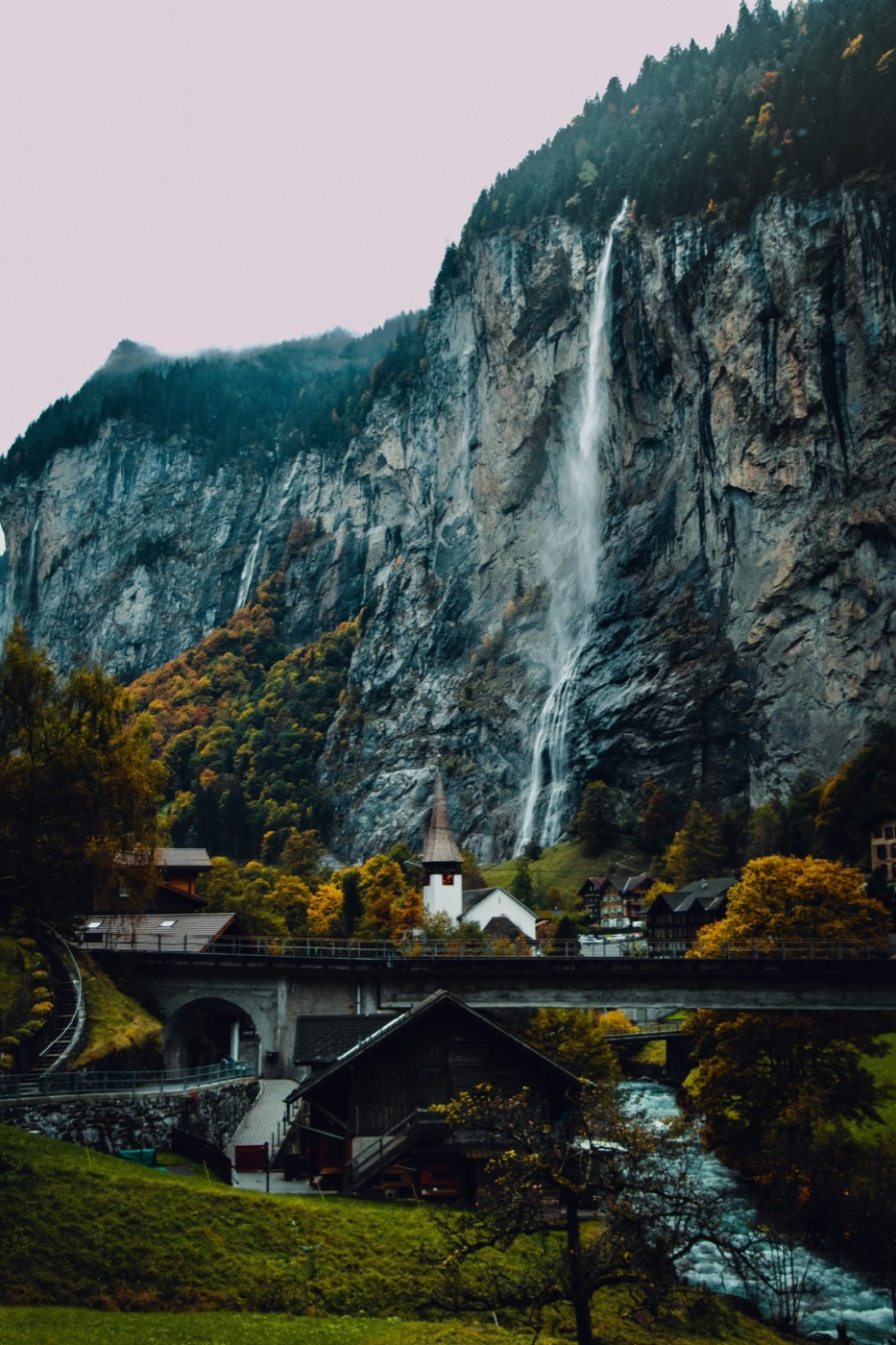
What do these mean?
Illegal A specific rule bans it, usually with a fine, and it can be enforced. Sleep somewhere else.
Not allowed No real place to camp here. A gated site, a developed area, or nowhere sensible to lie down, even if no fine is attached.
It depends You can sleep here, but there's a condition first: ask the landowner, book a spot, stay inside a set zone, or use a bivvy instead of a tent. The report says which.
Tolerated No rule clearly allows or bans it, but a single night is accepted in practice and nobody enforces against it. Normal for high bivouacs above the treeline.
Legal Camping one night is fine here. Either a rule allows it, or we checked every law and found nothing against it. Still: pitch late, leave early, no trace.
The 2025 ban, and the sentence inside it
Wild camping in Lauterbrunnen is governed by a communal law that is younger than most of the advice you will read about it. The Gemeinderat approved a new Camping-Reglement in July 2023; a referendum was seized against it, the Gemeindeversammlung adopted it on 17 June 2024, and it entered into force on 1 January 2025, replacing the reglement of 19721. Art. 2 defines camping broadly: tents, caravans, motorhomes, mobile homes and similar. The vanlife scene that made headlines here is covered exactly like a tent. What Art. 2 does not name is the bivouac without a tent, the sleeping bag under the sky. That edge is untested in Lauterbrunnen, and the reserve decree further up the valley shows how narrowly bivouacs are treated when a rule does address them: it needs an express exception even for high-tour bivouacs. So treat the wording gap as a curiosity, not a permission.
"Das Campieren ausserhalb von Campingplätzen ist grundsätzlich nicht gestattet. Davon ausgenommen ist das vereinzelte Campieren auf privatem Gelände, zu privaten Zwecken."Camping-Reglement Lauterbrunnen, Art. 3 para. 1: camping outside campsites is not permitted as a rule; exempted is occasional camping on private land, for private purposes.
Read that second sentence again, because it is the whole story. The ban is real: violations of Art. 3 are fined by the Gemeinderat with up to CHF 5'000 (Art. 24 para. 2)1, the Sicherheitskommission supervises the Campingwesen, and the municipality has fined wild campers since 2019, back then with CHF 200 tickets issued by deputized local controllers7. The pressure is real too: at the Bachalpsee in Grindelwald the neighbouring municipality runs the same kind of ban without any exception for private land. Lauterbrunnen wrote one in.
How it is possible: ask a farmer
The exception is narrow, and its edges matter. \"Vereinzelt\" means occasional, not a standing pitch. \"Auf privatem Gelände\" means the farmer's own meadow, not the public shore of the Lütschine. \"Zu privaten Zwecken\" means your private night, not a paid offer: the moment money or a platform is involved, the lawful route is the formal exception permit that the Sicherheitskommission can grant with the landowner's and the tourism association's consent (Art. 3 para. 2)1. And the reglement puts one duty on the owner: he has to make sure the necessary hygiene facilities are available.
The history strengthens the reading that a consented tent is intended, not an accident. The old rule already allowed occasional camping on private plots, but required the yes of the landowner and the local tourism association7. The 2025 text dropped the association for the informal case and added the private-purposes limit instead. What no authority has published is an official interpretation of the phrase, so treat the consent route as what it is: the reglement's own text, applied with common sense, not a blessed permit.
The lawful route is a farmer's yes. Ask the landowner personally before you pitch: one tent, one night, his ground, his conditions, toilet access sorted. The tourist office in the village can point you to farms; there is no published list and no public price, and that is the point: it is a private arrangement, not an offer.
If you want certainty instead, the four campsites in the valley are the designed answer: Camping Jungfrau and Camping Schützenbach in Lauterbrunnen, Camping Rütti and Camping Breithorn in Stechelberg. In season they run full, so book ahead6.
The back valley: a reserve ban with a mountaineer's exception
South of Stechelberg the valley becomes the Naturschutzgebiet Hinteres Lauterbrunnental, about 26 square kilometres from the Obersteinberg alps up to the Tschingelhorn and Breithorn crest, protected since 1960 and still governed by the original decree, which is registered in the land cadastre2. Inside it, the decree bans fires, camping and pitching tents outright (Ziff. 5 lit. e). But it also contains this:
"Ausnahmen von Ziff. 5 lit. e anlässlich der Ausführung von Hochtouren im Schutzgebiet."RRB 3804 of 21 June 1960, Ziff. 7 lit. b: exceptions from the fire, camping and tent ban on the occasion of the execution of high tours in the protected area.
That is a real, written exemption for alpinists, and it is older than most of the people citing the ban. The recognized high tours here start at the Schmadrihütte (2'261 m, 8 places, unstaffed, reservation mandatory): Lauterbrunnen Breithorn, Grosshorn, Tschingelhorn, Mittaghorn, the Gamchilücke crossing, the Mutthornhütte approach, and one approach route runs via the Oberhornsee5. A bivouac genuinely tied to such a tour has a direct legal anchor. A tent at the Oberhornsee for the photo, with no tour behind it, does not, and Pro Natura runs a ranger presence in the reserve from May to October4. The fire ban knows no exception at all, and a genuine emergency bivouac is always permitted, the canton says so expressly8.
What the maps say
I checked the official geodata point by point, because that is where blogs and models fail. No federal hunting-ban district touches the municipality: the village, Stechelberg, the Sefinental, Kilchbalm, the Mürren and Wengen flanks and the Oberhornsee all return nothing on the federal layer, verified with a positive control on the neighbouring Schwarzhorn district3. So the federal game-reserve offence you read about elsewhere simply does not apply here.
The cantonal wildlife layer adds nothing against tents either. Lauterbrunnen has 13 communal Wildruhezonen, and their rules restrict winter sports (1 November to 30 June) and basejumping, not camping; the one cantonal Wildschutzgebiet in the area, Breithorn, deliberately carries no camping measure, while 28 other Bernese areas do3. The back valley additionally sits in the BLN landscape inventory and the UNESCO Jungfrau-Aletsch perimeter, which bind the authorities but do not fine a camper. The decisive norms remain the communal reglement and the 1960 decree.
Where you can legally sleep
- The four campsites: Camping Jungfrau and Camping Schützenbach in Lauterbrunnen, Camping Rütti and Camping Breithorn in Stechelberg. The intended answer, and in summer a full one, so reserve6.
- A farmer's meadow with his consent, inside the Art. 3 exception: occasional, one tent, private, hygiene sorted by the owner.
- The huts and mountain hotels: Berggasthaus Obersteinberg and Hotel Tschingelhorn (staffed, no electricity, real beds), the Schmadrihütte (reserve ahead), the Rotstockhütte on the Sefinental side, the Mutthornhütte up on the glacier.
- A genuine high-tour bivouac in the reserve under Ziff. 7 lit. b: tied to a real objective, one night, no fire, out early.
General rules for wild camping
This applies everywhere you are actually allowed to sleep outside, on a Lauterbrunnen farmer's meadow with his yes too. It is not legal text, but decency and common sense, and it is the reason farmers still say yes at all.
- No fire. An open fire has no place in the mountains, and in the reserve it is banned without exception. A gas stove is enough.
- Pitch late, strike early. Set up towards evening, gone again early. A bivouac is one night, not a base camp.
- Leave no rubbish. Everything you carry up you carry down, organic scraps and toilet paper included.
- At least 50 metres from any water for the big business, so you do not foul what people and livestock drink.
- Stay small and quiet. A small group, no speaker, no drone, dogs on the lead, and the alp staff's word goes.
Disclaimer
This article reflects my research and assessment to the best of my knowledge, as of July 2026. It is based on the publicly accessible and official sources linked below. It does not replace legal advice and is not a binding statement of the current legal situation.
Communal reglements, reserve rules, ownership and enforcement practice change, and Lauterbrunnen's camping law is barely a year and a half old. Before every tour, check the current sources yourself, ask the landowner or the municipality, and follow instructions on site. Anyone who spends the night outside bears responsibility for their own conduct and any consequences themselves. Hikebeast, Leon Helg and Saftladen GmbH accept no liability for decisions made on the basis of this text, and call on no one to break applicable law.
Frequently asked questions
Is wild camping allowed in Lauterbrunnen?
What is the fine for wild camping in Lauterbrunnen?
Can I sleep in my van in Lauterbrunnen?
Is a bivouac at the Oberhornsee legal?
How do I camp legally in Lauterbrunnen then?
Leon Helg
Swiss filmmaker and software developer. Spends his free time in the Swiss Alps and maps his favourite spots for Hikebeast. Posts as @leon.helg on Instagram and TikTok.
Sources
- Camping-Reglement der Einwohnergemeinde Lauterbrunnen, in force since 1 January 2025 (adopted by the Gemeindeversammlung of 17 June 2024 after a facultative referendum; replaces the reglement of 27 June 1972). Art. 2 (definition incl. caravans and motorhomes), Art. 3 (ban plus the private-land exception and the Sicherheitskommission permit route), Art. 24 para. 2 (fine up to CHF 5'000), Art. 27 (entry into force). lauterbrunnen.ch. ↩
- Regierungsratsbeschluss 3804 of 21 June 1960, Naturschutzgebiet Lauterbrunnental: Ziff. 5 lit. e (ban on fires, camping and tents), Ziff. 7 lit. b (exception during high tours), Ziff. 11 (fine or detention), perimeter description; registered in the ÖREB cadastre. oerebfiles.apps.be.ch. ↩
- Official geodata checks: federal identify at nine municipality points (layers Jagdbanngebiete, Wildruhezonen, Wildtierschutzgebiete, BLN, UNESCO; positive control on the Schwarzhorn district), plus canton Bern WTSchV (BSG 922.63, Anhang 2 as of 1 December 2024, Wildschutzgebiet Breithorn Nr. 5) and the cantonal Wildruhezonen dataset (13 communal zones, winter-sport and basejumping measures only). map.geo.admin.ch, belex.sites.be.ch. ↩
- Canton Bern nature-reserve register, Hinteres Lauterbrunnental (26 km², protected since 1960, shared perimeter with the wildlife protection area, September hunting window), and Pro Natura Bern reserve page (ranger presence May to October, 077 523 59 60; Alp Untersteinberg acquired 1947). naturschutzgebiete.sites.be.ch, pronatura-be.ch. ↩
- Akademischer Alpenclub Bern, Schmadrihütte (2'261 m, in the reserve, 8 places, reservation mandatory, reserve-wide fire ban notice; base for the Breithorn, Grosshorn, Tschingelhorn and Mittaghorn tours, approach via the Oberhornsee). aacb.ch. ↩
- SRF, "Wildes Campieren wird zum stinkenden Problem": the municipality-wide ban, Vizegemeindepräsident Karl Näpflin on decreasing conflicts and full campsites. srf.ch. ↩
- Regional press, October 2019, "200 Franken kostet die Nacht": the CHF 200 practice under the old reglement, deputized municipal controllers, and the old exception requiring the landowner's and the tourism association's consent. Historical context for the 2025 rules. ↩
- Regierungsrat des Kantons Bern, Vortrag 2022.WEU.4238 on the WTSchV revision: camping and bivouacking are banned in zones with route obligations even without an explicit clause, and "Ein Notbiwak zum Schutz von Leib und Leben ... bleibt immer erlaubt" (an emergency bivouac always remains permitted). rrgr-service.apps.be.ch. ↩
- Swiss Alpine Club SAC, "Campieren und Biwakieren": the above-treeline tolerance applies only where no contrary rules exist, which the Lauterbrunnen reglement and the reserve decree are; conduct guidance for bivouacs near huts. Guidance, not law. sac-cas.ch. ↩