Wild camping on the Kaiseregg
One night on the Kaiseregg is lawful. Nothing at federal level, nothing in Fribourg and nothing in the commune of Plaffeien prohibits a bivouac at 2'184 m, so there is nothing to apply for. The Gantrisch nature park still asks you to take one of its pitches.
What do these mean?
Illegal A specific rule bans it, usually with a fine, and it can be enforced. Sleep somewhere else.
Not allowed No real place to camp here. A gated site, a developed area, or nowhere sensible to lie down, even if no fine is attached.
It depends You can sleep here, but there's a condition first: ask the landowner, book a spot, stay inside a set zone, or use a bivvy instead of a tent. The report says which.
Tolerated No rule clearly allows or bans it, but a single night is accepted in practice and nobody enforces against it. Normal for high bivouacs above the treeline.
Legal Camping one night is fine here. Either a rule allows it, or we checked every law and found nothing against it. Still: pitch late, leave early, no trace.
Three layers, and all three are empty
Wild camping on the Kaiseregg has a short legal answer, and the value is in being able to say what was checked rather than just asserting it.
Federal. Queried at the summit on 30 July 2026: no federal hunting-ban district, no wildlife rest zone, no BLN landscape, no mire, floodplain or amphibian object, no dry-meadow inventory, no building zone. Two controls make that meaningful. A positive control at the Bachalpsee returns hunting-ban district no. 4 Schwarzhorn, so the layers answer. An invalid-layer control returns an HTTP error rather than an empty set, which is the trap that turns a typo into a false all-clear.1
Cantonal. Fribourg has no cantonal wild-camping prohibition. This is settled ground for us rather than a fresh guess: it is the finding behind the Ritzli-Alp, the Dent de Broc, the Tine gorge and four other Fribourg spots in the guide.2
Communal. Plaffeien publishes no police regulation and no camping regulation. Same commune as the Schwarzsee, four kilometres down the hill, where we established exactly that. In this canton the communal layer is usually where a camping ban would live, as at Jaun, and here there is no instrument to carry one.2
So there is nothing to ask for and nobody to phone. Under Swiss law what no norm prohibits is permitted, and at 2'184 m on an open summit ridge, well above the tree line, a single considerate night is the case the Alpine Club's own position describes.4
The park is asking you not to, and it is worth listening
Here is the part I would want to know if I were driving up to Schwarzsee tonight.
The Kaiseregg sits inside the Gantrisch Regional Nature Park. It is worth being precise about what that is, because "nature park" sounds like a prohibition and is not one. A regional park of national importance under the federal nature and heritage act is a label awarded to a region that commits to a charter. It brings funding, a brand and a set of shared goals. It does not come with conduct rules for visitors and it does not create an offence. Unlike a Naturschutzgebiet in a communal Schutzverordnung, there is no article here that says Lagern, Zelten or Campieren, and no fine attached to anything.3
What the park does have is a camping code, and its position is unambiguous: use the official offers, sleep only where overnighting is provided for, respect overnight bans. Park staff have said publicly that they do not want the region to become a place where everyone simply finds a spot for themselves. Pressure rose sharply from 2020 onward, and the park's answer was constructive rather than punitive: it worked with farmers to open bookable pitches, through the Nomady platform, on the theory that the more legitimate places exist, the less anyone needs to improvise.3
The honest read. Nothing stops you sleeping on the Kaiseregg for one night, and I am not going to pretend otherwise, because a false ban is just as bad as a false permission. But a park that is actively trying to keep wildcamping from becoming a problem is exactly the situation where behaving well is the difference between this staying legal and Plaffeien writing its first camping reglement. If a booked pitch or a hut works for your plan, take it.
Two practical notes. There is a chairlift from Schwarzsee to a station below the summit, and the summit itself is about a kilometre further on foot. A bivouac that is really a short walk from a lift station is the kind that gets noticed, so go over the top and away from the infrastructure. And the Schwarzsee shore itself is a different question: a developed resort with hotels, two campsites and a busy day-use lakefront, where we rate a bivouac as a bad idea for reasons that have nothing to do with statutes.2
The place, and what would change the answer
Summit: LV95 2'590'853 / 1'166'814, 2'184 m, commune of Plaffeien, canton Fribourg, on the ridge above Schwarzsee and the Jaun side.
Two things would flip this verdict, and both are worth checking before a trip rather than after:
- Plaffeien adopting a camping or police reglement. The commune has none today. Given the pressure the park describes, that is the single most likely change, and it would take effect the day it is published.
- A cantonal move in Fribourg. Also none today, and less likely than the communal route, but it is the layer that would cover every Fribourg spot at once.
What would not change it: the park boundary. A regional nature park can extend, shrink or renew its charter without any of that touching what a walker may do, because the charter binds the region's institutions and not you.3
One thing I could not settle and will not pretend to: whether the alp above Schwarzsee has a tenant who would rather be asked. On farmed alp ground the courteous move is to ask if you meet anyone, and their word on where to pitch beats any map. That is manners rather than law, and it is how these places stay open.
Where you can legally sleep
- The summit ridge itself, for one night, above the tree line and away from the lift1.
- A booked farm pitch through the park's Nomady partnership, which is the option the park built specifically so that improvising is unnecessary3.
- Berggasthaus Kaiseregg and the huts and inns around Schwarzsee, if you would rather have a roof.
- The two campsites at Schwarzsee, for a vehicle or a longer stay.
- Not the Schwarzsee shore. Lawful, and a bad idea: a developed, crowded lakefront is where the backlash comes from.
General rules for wild camping
This matters more here than at most spots, because here you actually may, and because a park is watching this exact behaviour and deciding what to do about it. The list below is not law. It is the reason the answer above is still yes.
- No fire. An open fire has no place in the mountains. A gas stove is enough.
- Pitch late, strike early. Set up towards evening, gone again early. A bivouac is one night, not a base camp.
- Leave no rubbish. Everything you carry up you carry down, organic scraps and toilet paper included.
- At least 50 metres from any water for the big business, so you do not foul what people and livestock drink.
- Stay small and quiet. A small group, no speaker, no drone, dogs on the lead, and the alp staff's word goes.
Disclaimer
This article reflects my research and assessment to the best of my knowledge, as of July 2026. It is based on the publicly accessible and official sources linked below. It does not replace legal advice and is not a binding statement of the current legal situation.
The verdict rests on the absence of any prohibition at the federal, cantonal and communal levels, and an absence can end. Plaffeien has no camping reglement today and could adopt one; the Gantrisch park is actively working on the wildcamping question. Before every tour, check the current sources yourself and follow instructions on site. A genuine emergency bivouac in distress is a separate question from a planned camp. Anyone who spends the night outside bears responsibility for their own conduct and any consequences themselves. Hikebeast, Leon Helg and Saftladen GmbH accept no liability for decisions made on the basis of this text, and call on no one to break applicable law.
Frequently asked questions
Is wild camping allowed on the Kaiseregg?
Doesn't the Gantrisch nature park ban camping?
So why does the article tell me to think twice?
What about the Schwarzsee itself?
Is there a lift, and does that matter?
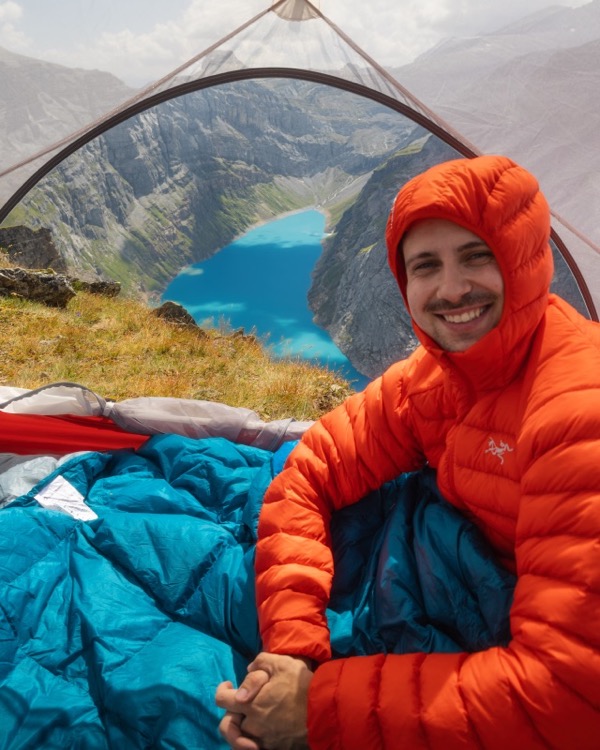
Leon Helg
Swiss filmmaker and software developer. Spends his free time in the Swiss Alps and maps his favourite spots for Hikebeast. Posts as @leon.helg on Instagram and TikTok.
Sources
- Official federal geodata, queried 30 July 2026 at the Kaiseregg summit, LV95 2'590'853 / 1'166'814 (2'184 m, commune of Plaffeien): hunting-ban districts, wildlife rest zones, BLN, mire, raised-bog, floodplain, amphibian and dry-meadow inventories and building zones all return a genuinely empty result set. The only hit is the Gantrisch Regional Nature Park in the parks-of-national-importance layer. Verified with a positive control at the Bachalpsee, which returns hunting-ban district no. 4 Schwarzhorn, and an invalid-layer control, which returns an HTTP error rather than an empty result. map.geo.admin.ch. ↩
- Canton Fribourg and commune of Plaffeien: Fribourg has no cantonal wild-camping prohibition, and Plaffeien publishes neither a police nor a camping regulation. Established across seven Fribourg spots in our own guide research, including the Schwarzsee, which lies in the same commune roughly four kilometres below the summit and is rated a bad idea on practical rather than legal grounds. plaffeien.ch. ↩
- Naturpark Gantrisch, a regional nature park of national importance: its camping code ("Campieren mit Respekt, Rücksicht und Toleranz") asks visitors to use official overnight offers and to respect overnight bans, and the park has partnered with the Nomady platform so farmers can open bookable pitches. Park statements on curbing wildcamping after the 2020 surge were reported by SRF. A regional park is a label and charter under the federal nature and heritage act; it carries no conduct rule for visitors and no penalty. gantrisch.ch, parks.swiss. ↩
- Swiss Alpine Club SAC, "Campieren und Biwakieren": a single considerate night above the tree line is widely accepted where no contrary rule exists, which is the situation here. Guidance, not law. sac-cas.ch. ↩
- Swiss Civil Code (ZGB), SR 210, Art. 699: forest and pasture are accessible to everyone within customary limits. A right of access and not a right to spend the night; what makes this spot lawful is the absence of any prohibition, not Art. 699. fedlex.admin.ch.
- Federal Act on the Protection of Nature and Cultural Heritage (NHG), SR 451, and the Parks Ordinance: the categories of park of national importance, and the charter mechanism by which a regional nature park is awarded and renewed. Explains why a park boundary is not a camping rule. fedlex.admin.ch.